What Ancient Astronomers Got Right (And Wrong) About Planetary Motion
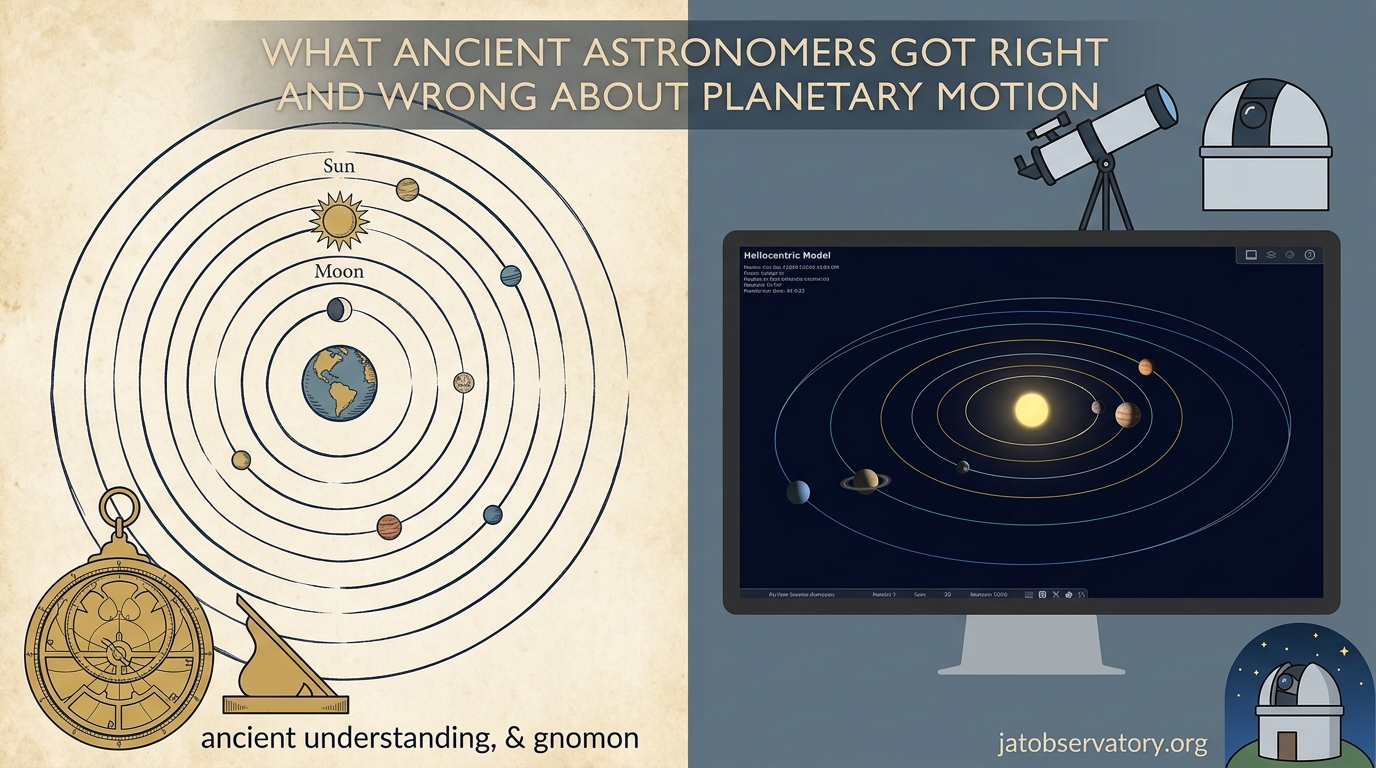
The night sky looks chaotic at first. Stars wheel overhead in predictable patterns, but planets wander. They speed up, slow down, and sometimes reverse direction entirely. Ancient observers noticed these patterns thousands of years ago and spent centuries trying to explain them. Some of their ideas were brilliantly accurate. Others were completely wrong. Understanding both their successes and failures reveals how science actually progresses.
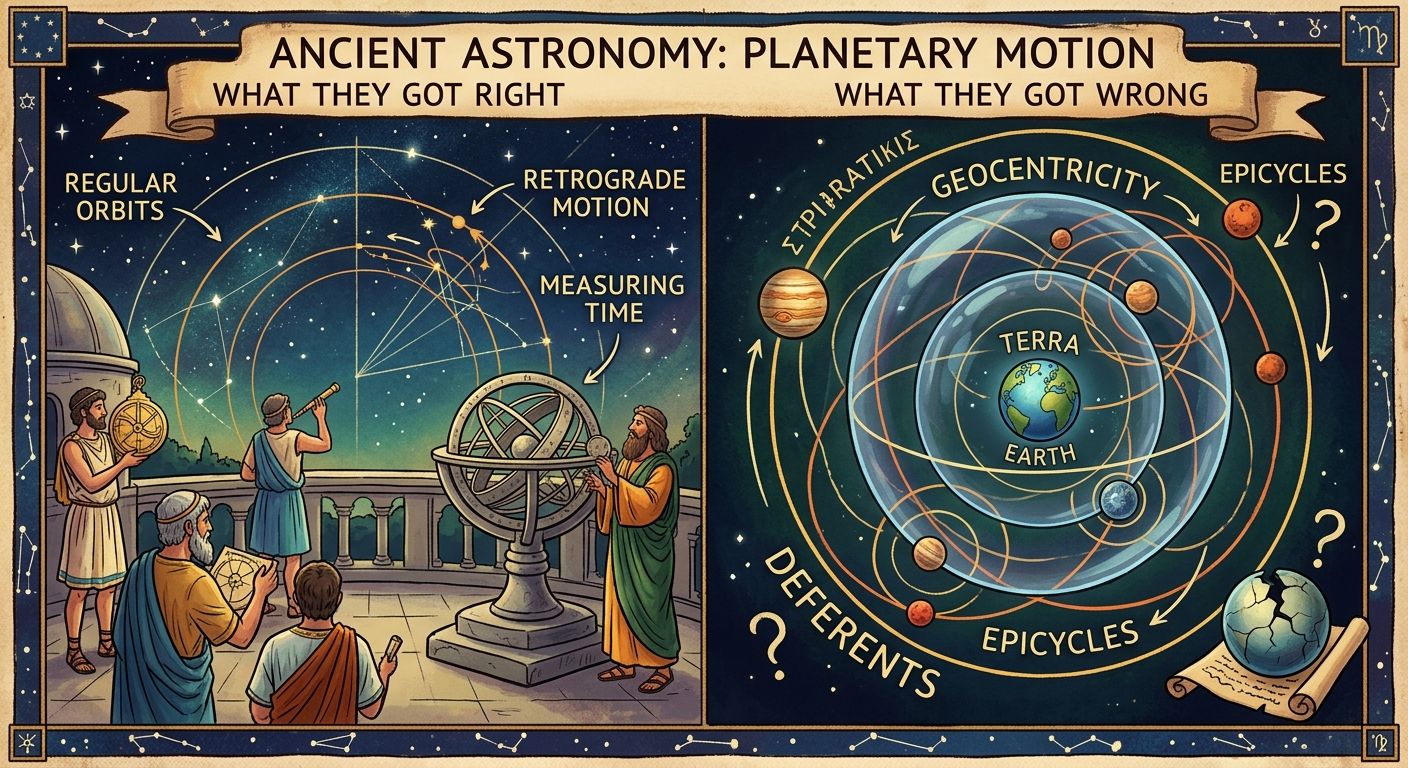
Ancient astronomers planetary motion studies combined accurate observations with flawed models. Babylonians predicted planetary positions through mathematical patterns. Greeks built geocentric systems with epicycles. Islamic scholars refined measurements and preserved knowledge. Copernicus finally placed the Sun at the center, but Kepler’s elliptical orbits and Newton’s gravity laws completed our modern understanding of how planets actually move through space.
What Ancient Observers Got Right About Planetary Movement
Babylonian astronomers tracked planetary positions with remarkable precision starting around 1800 BCE. They didn’t have telescopes or computers. Just patience, clear skies, and meticulous record keeping.
They noticed Venus appeared as both a morning and evening star. They recorded that Mars took about 780 days to return to the same position relative to the stars. These observations were accurate to within a few days across decades of tracking.
The Babylonians developed mathematical models to predict planetary positions. These weren’t based on physical theory. They were pure pattern recognition. Their system worked because planetary orbits are regular, even if the underlying geometry was misunderstood.
Greek astronomers inherited this knowledge and added geometric thinking. Aristarchus of Samos proposed a heliocentric model around 270 BCE, placing the Sun at the center. He was right, but his idea didn’t catch on. The evidence available at the time seemed to contradict it.
Hipparchus cataloged over 850 stars and measured the length of the year to within six minutes of the modern value. He discovered the precession of the equinoxes, a slow wobble in Earth’s axis that takes 26,000 years to complete. This was genuine discovery through careful measurement.
Islamic astronomers between 800 and 1400 CE preserved Greek texts and pushed observational astronomy forward. They built massive instruments to measure planetary positions with unprecedented accuracy. Al-Battani’s measurements of the solar year differed from modern values by only two minutes.
The Fundamental Mistakes That Held Science Back
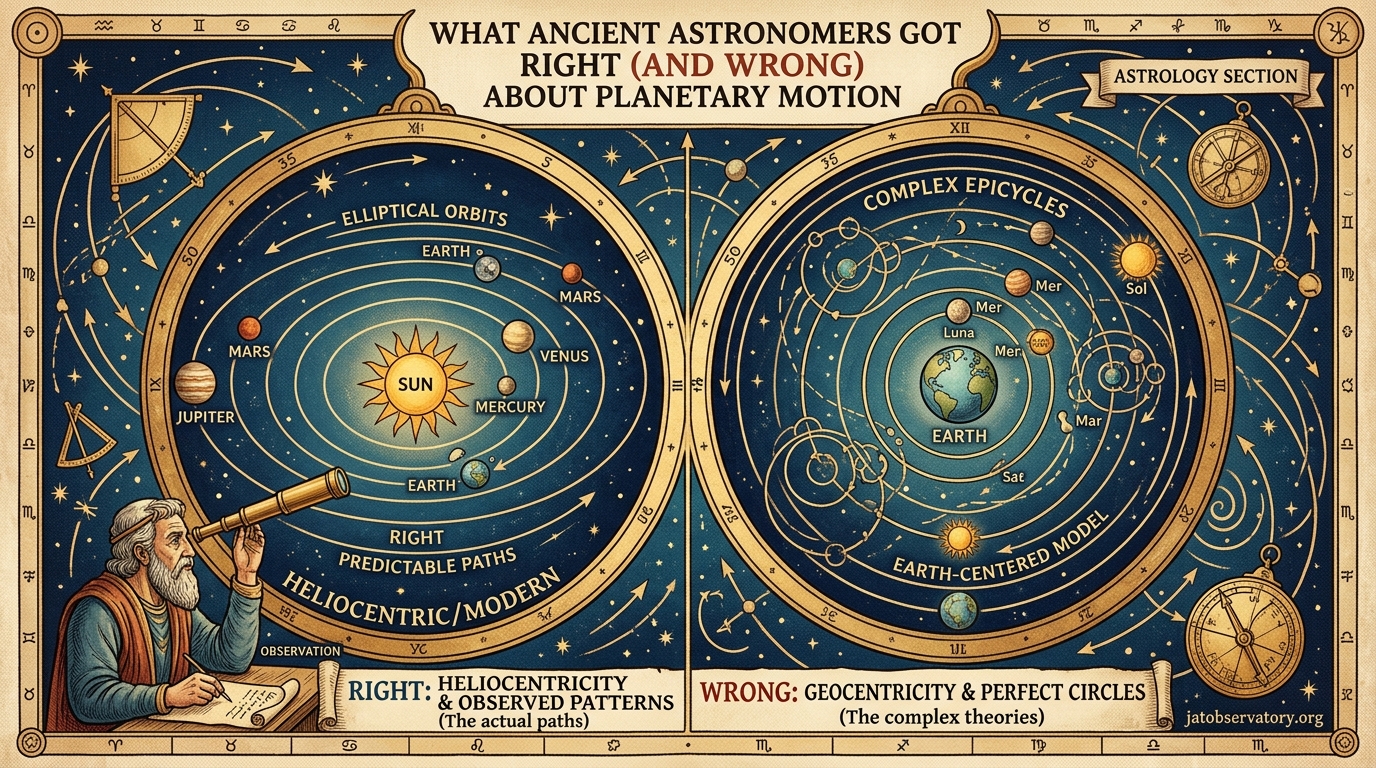
The geocentric model dominated ancient astronomy for over 2,000 years. Earth sat motionless at the center while everything else revolved around it. This felt obvious. The ground doesn’t seem to move. Stars appear to circle overhead every night.
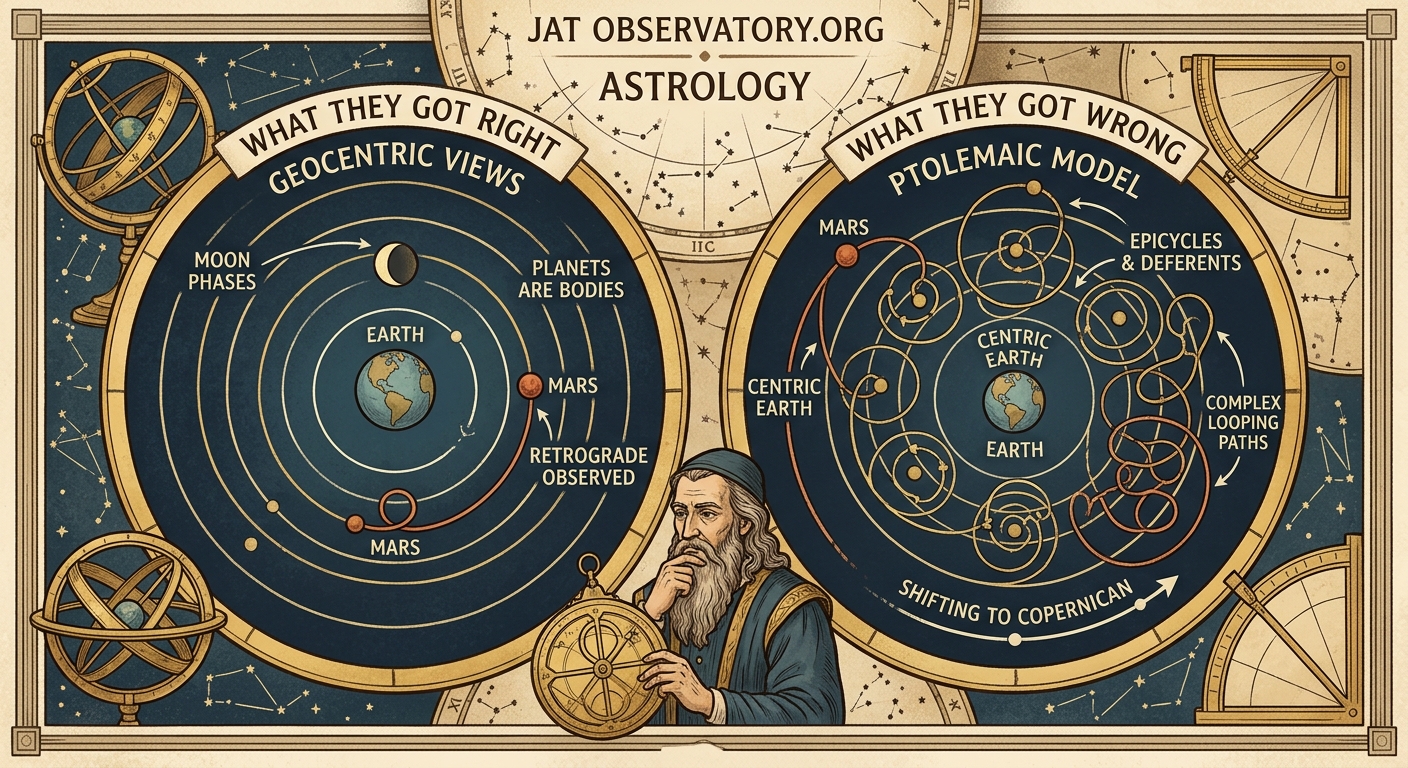
Ptolemy codified this system around 150 CE in the Almagest. His model used epicycles, small circles whose centers moved along larger circles called deferents. Planets moved along epicycles while the epicycle centers orbited Earth.
This system could predict planetary positions reasonably well. But it was wrong about the underlying reality. Planets don’t actually move in epicycles. They orbit the Sun in ellipses.
The epicycle model grew increasingly complex as observations improved. Astronomers added epicycles on top of epicycles. Some planets needed five or six nested circles to match observations. The system worked as a calculation tool but offered no physical explanation for why planets moved this way.
Ancient astronomers also believed in perfect circular motion. Circles were considered the most perfect geometric form, so celestial objects must move in circles. This philosophical assumption prevented them from considering elliptical orbits, which are the actual shape of planetary paths.
The concept of crystalline spheres held back physical understanding. Many ancient thinkers believed planets were embedded in transparent spheres that rotated at different speeds. This mechanical model couldn’t explain why planets changed brightness or why Mars showed retrograde motion.
How Different Cultures Approached the Same Sky
Chinese astronomers developed independent methods for tracking planetary motion. They organized the sky into 28 lunar mansions and tracked planets as they moved through these regions. Their records of planetary conjunctions and eclipses date back to 1500 BCE.
Chinese astronomy focused more on recording events than building predictive models. They excelled at noting unusual phenomena like comets, novae, and planetary groupings. These records remain valuable for modern astronomers studying historical events.
Mayan astronomers achieved remarkable accuracy tracking Venus. The Dresden Codex contains a Venus table covering 584 days, matching the planet’s synodic period almost exactly. They predicted Venus positions centuries in advance without telescopes or modern mathematics.
Indian astronomers developed sophisticated mathematical techniques. Aryabhata proposed in 499 CE that Earth rotates on its axis, explaining the daily motion of stars. This was correct but not widely accepted outside India for centuries.
Different cultures reached different conclusions from the same observations because they started with different assumptions. Greek philosophy emphasized geometry and perfect forms. Chinese astronomy served state astrology and calendar making. Mayan astronomy connected to religious cycles and agricultural timing.
The Observation Techniques That Actually Worked
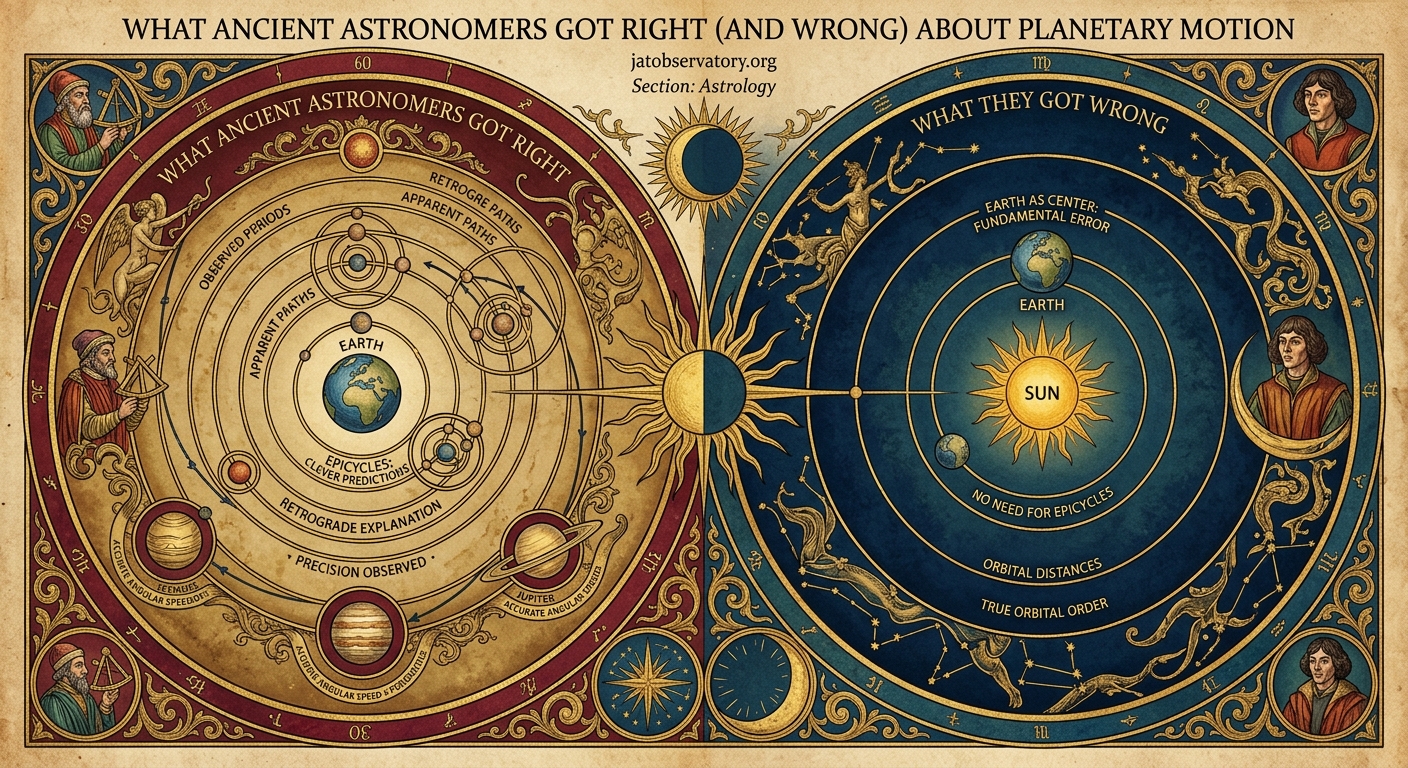
Ancient astronomers used simple but effective tools. The gnomon, a vertical stick casting a shadow, measured the Sun’s position throughout the year. This revealed the solstices and equinoxes with precision.
Cross-staff instruments measured angles between celestial objects. Two sticks arranged in a cross allowed observers to determine the angular separation between planets or stars. Accuracy improved as instruments grew larger.
The armillary sphere represented the celestial sphere with metal rings. Observers could align the rings with actual celestial objects and read off coordinates. Islamic astronomers built massive versions several meters across for greater precision.
Here’s how ancient observers tracked planetary motion systematically:
- Choose a reference star pattern near the planet’s path through the sky
- Record the planet’s position relative to those stars every few nights
- Note the date, time, and any unusual brightness or color changes
- Continue observations through the entire cycle until the planet returns to its starting position
- Compare multiple cycles to identify patterns and predict future positions
Water clocks and sundials provided time measurements. Accurate timekeeping was essential for converting observed positions into predictive models. Islamic astronomers developed sophisticated water clocks that maintained accuracy for hours.
Naked eye observation reached its peak with Tycho Brahe in the 1500s. His measurements were accurate to about one arcminute, roughly 1/30th the width of the full Moon. This precision came from large instruments, careful technique, and decades of patient observation.
The Mathematical Breakthroughs That Changed Everything
Babylonian astronomers developed algebraic methods to predict planetary positions. They used arithmetic sequences and periodic functions without understanding why these patterns existed. Their goal was prediction, not explanation.
Greek mathematicians added geometric models. Apollonius of Perga developed the theory of epicycles around 200 BCE. This geometric approach allowed calculation of planetary positions at any future date.
Ptolemy’s Almagest presented a complete mathematical system for planetary motion. Despite being based on the wrong physical model, his equations predicted positions accurately enough for navigation and calendar making for over 1,000 years.
Islamic mathematicians introduced trigonometry to astronomy. They developed spherical trigonometry specifically to solve astronomical problems. These techniques remain fundamental to celestial mechanics today.
Copernicus simplified planetary calculations by placing the Sun at the center. His 1543 model still used circular orbits and some epicycles, but it reduced the total number of circles needed. More importantly, it suggested the correct physical arrangement.
Kepler discovered that planets move in ellipses with the Sun at one focus. His three laws of planetary motion, published between 1609 and 1619, described how planets actually move. These were empirical laws based on Tycho’s observations, not derived from theory.
Newton finally explained why Kepler’s laws worked. His law of universal gravitation, published in 1687, showed that a single force governed both falling apples and orbiting planets. This unified celestial and terrestrial physics.
Comparing Ancient Methods and Modern Understanding
| Ancient Technique | What They Got Right | What They Missed | Modern Equivalent |
|---|---|---|---|
| Babylonian period relations | Accurate synodic periods | Physical cause of motion | Orbital resonance calculations |
| Greek epicycles | Predicted positions | True orbital geometry | Fourier analysis of orbits |
| Ptolemaic equants | Matched variable speeds | Elliptical paths | Kepler’s second law |
| Chinese conjunction records | Precise event timing | Predictive models | Ephemeris databases |
| Islamic instrument building | Measurement accuracy | Heliocentric geometry | Radio telescope arrays |
The table shows how ancient astronomers planetary motion studies contained genuine insights wrapped in incorrect frameworks. Their observations were often excellent. Their physical models were usually wrong.
Modern astronomy still uses some ancient concepts. Ecliptic coordinates derive from the path ancient observers saw the Sun take through the constellations. The zodiac itself reflects the band where planets appear in the sky.
We’ve replaced epicycles with ellipses and gravity. But the fundamental process remains the same: observe, measure, find patterns, build models, test predictions, revise models. Ancient astronomers practiced this scientific method even when their tools and theories were limited.
Why Retrograde Motion Confused Everyone
Retrograde motion stumped ancient astronomers more than any other phenomenon. Most of the time, planets drift eastward relative to the stars. But periodically, they stop, move westward for weeks or months, then resume their eastward journey.
Mars shows the most dramatic retrograde loops. Every 26 months, it traces a backward path across the sky. Ancient observers recorded these loops meticulously but struggled to explain them.
The geocentric model required complex epicycle arrangements to reproduce retrograde motion. Ptolemy’s system had planets moving along small circles whose centers orbited Earth. When the planet moved on the inner portion of its epicycle, it appeared to move backward as seen from Earth.
This explanation was mathematically correct but physically meaningless. Planets don’t actually reverse direction. The retrograde effect is an illusion caused by Earth overtaking outer planets in their orbits.
Copernicus’s heliocentric model explained retrograde motion naturally. When Earth passes Mars in its orbit, Mars appears to move backward against the distant stars, just as a slower car seems to move backward when you pass it on the highway.
This explanation was simpler and more elegant. But it required accepting that Earth moves, which contradicted everyday experience. The power of the heliocentric model wasn’t just accuracy but explanatory simplicity.
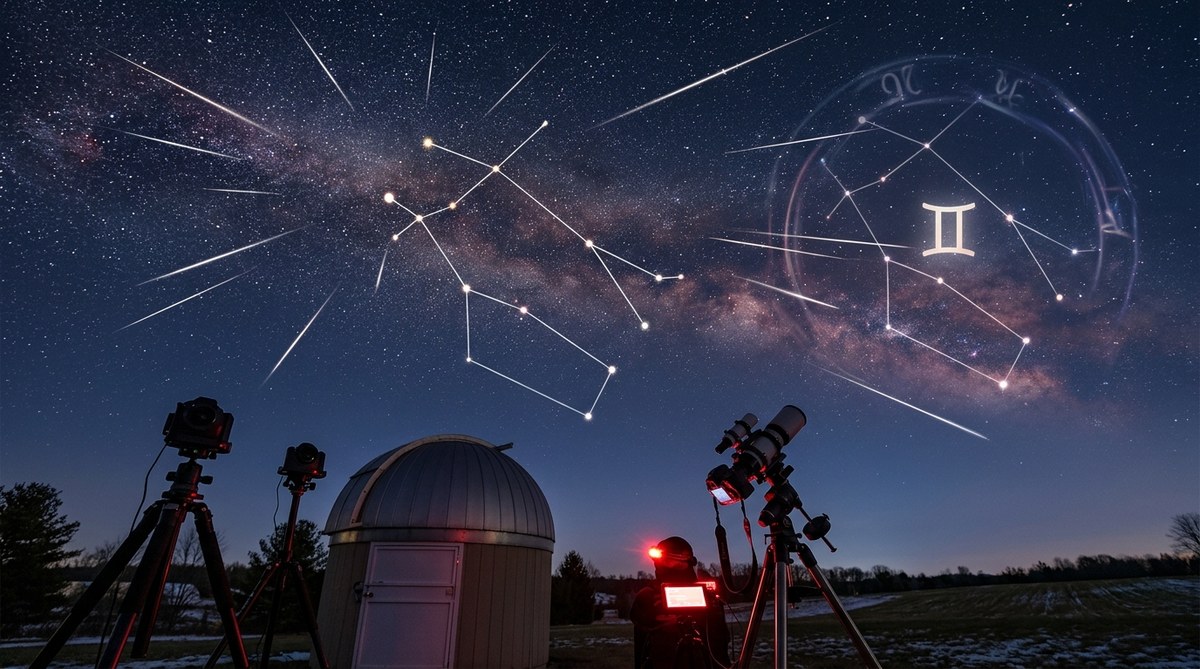
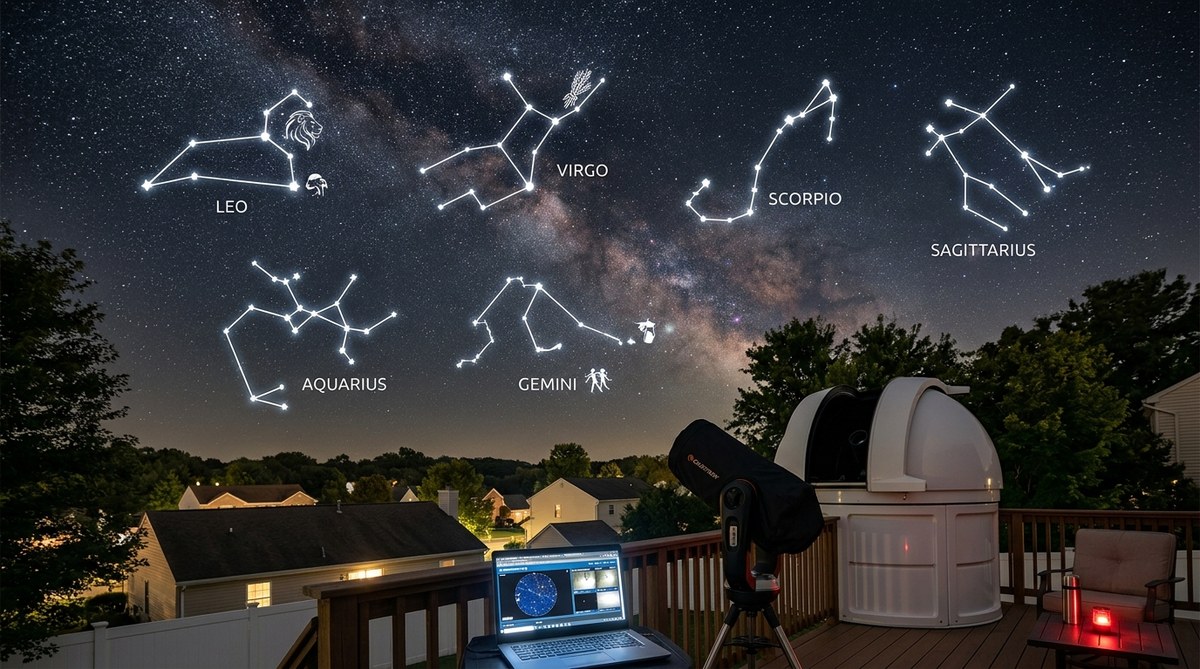
Modern observers can track planetary alignments through backyard telescopes and see these geometric relationships firsthand.
The Role of Astrology in Driving Astronomical Progress
Ancient astronomy and astrology were inseparable. Most planetary observations were motivated by astrological prediction. Kings wanted to know if the stars favored military campaigns. Farmers needed to know when to plant crops.
Babylonian astrology drove the development of mathematical astronomy. Predicting planetary positions became essential for casting horoscopes. This practical need motivated centuries of careful observation and calculation.
Greek astrology adopted Babylonian techniques and added philosophical frameworks. The idea that celestial bodies influenced earthly events seemed logical in a cosmos where everything was interconnected.
Islamic astronomers often worked as court astrologers. Their salaries depended on providing accurate predictions. This economic incentive pushed them to build better instruments and refine observational techniques.
The distinction between astronomy and astrology didn’t fully emerge until the 1600s. Kepler cast horoscopes to support himself while developing his laws of planetary motion. Tycho Brahe served as imperial mathematician and astrologer to Emperor Rudolf II.
Modern astronomy abandoned astrological interpretation but retained the observational heritage. The careful record keeping, mathematical techniques, and instrument designs developed for astrology became the foundation of scientific astronomy.
The ancient astronomers who tracked planets for astrological purposes created an observational database that later scientists used to discover the actual laws of planetary motion. Their motivations were mystical, but their methods were empirical and their records were invaluable.
What We Can Learn From Ancient Mistakes
Ancient astronomers planetary motion theories teach us that smart people can be systematically wrong. Ptolemy wasn’t stupid. His geocentric model was logical given the evidence available and the assumptions of his time.
Scientific progress often requires abandoning cherished assumptions. The idea that Earth sits motionless at the center felt obvious for millennia. Accepting that we live on a moving planet orbiting an ordinary star required a fundamental shift in perspective.
Good observations outlast bad theories. Babylonian planetary records remained useful long after their cosmological ideas were abandoned. Tycho’s measurements enabled Kepler’s discoveries despite Tycho’s rejection of the heliocentric model.
Mathematical models can predict accurately without representing reality. Ptolemy’s epicycles worked for calculations even though planets don’t actually move that way. Modern physics uses similar “effective theories” that predict well without claiming to be fundamentally true.
Complexity isn’t always sophistication. The geocentric model grew increasingly elaborate as astronomers added more epicycles. The heliocentric model was simpler and ultimately more powerful. Sometimes the right answer is the less complicated one.
Cultural context shapes scientific questions. Greek astronomers asked why planets moved and sought geometric explanations. Chinese astronomers focused on recording events for state purposes. Different goals led to different kinds of knowledge.
Connecting Ancient Observations to Modern Backyard Astronomy
Today’s amateur astronomers can reproduce many ancient observations with simple equipment. Tracking Mars through retrograde motion takes just a few months of noting its position every few nights.
Planetary conjunctions that ancient observers recorded for astrological significance remain visually striking events. When Jupiter and Saturn appeared to merge in December 2020, backyard observers worldwide photographed an event their ancient counterparts would have considered deeply meaningful.
Modern tools make ancient discoveries accessible. Free sky mapping software can show planetary positions for any date in history, letting you see exactly what ancient astronomers saw.
The same patience ancient observers needed still matters. Planetary motion reveals itself slowly. You can’t understand it from one night of observation. You need weeks or months of regular tracking, just as Babylonian astronomers did 3,000 years ago.
Understanding ancient methods deepens appreciation for modern astronomy. When you know that Hipparchus measured the year’s length to within minutes using only naked eye observations, you gain respect for both his skill and the power of modern instruments that achieve far greater precision.
From Ancient Skywatching to Scientific Revolution
The transition from ancient astronomy to modern science wasn’t a single breakthrough. It was a gradual process of better observations, mathematical innovations, and conceptual shifts spanning centuries.
Copernicus started the revolution but didn’t complete it. His heliocentric model was correct in principle but still relied on circular orbits and some epicycles. It simplified calculations but didn’t immediately improve accuracy.
Tycho provided the observational foundation. His decades of precise measurements gave Kepler the data needed to discover elliptical orbits. Without Tycho’s patience and skill, Kepler’s laws might have been delayed by generations.
Kepler found the patterns but not the cause. His three laws described how planets moved but didn’t explain why. They were empirical regularities waiting for a theoretical explanation.
Galileo’s telescope provided visual confirmation. Seeing Jupiter’s moons orbit that planet demonstrated that not everything circled Earth. Observing Venus’s phases showed it orbited the Sun. These observations made the heliocentric model harder to dismiss.
Newton unified everything. His law of gravitation explained why Kepler’s laws worked. It showed that the same force governing falling objects on Earth also kept planets in their orbits. This was the true scientific revolution: finding universal laws that applied everywhere.
Ancient astronomers laid the groundwork for all of this. Their observations, their mathematical techniques, and even their mistakes created the foundation that later scientists built upon.
Why Ancient Astronomy Still Matters Today
Studying ancient astronomers planetary motion work isn’t just historical curiosity. It reveals how science actually progresses through a combination of careful observation, creative thinking, and willingness to abandon failed ideas.
The ancient observational records remain scientifically valuable. Astronomers studying long-term changes in Earth’s rotation use Babylonian eclipse records. Historical supernova observations help understand stellar evolution.
Ancient instruments inspire modern designs. The principles behind armillary spheres and cross-staffs appear in modern telescope mounts and measurement systems. Good design principles are timeless.
Understanding the geocentric model helps explain why science isn’t obvious. The Earth really doesn’t feel like it’s moving. Ancient astronomers weren’t foolish for believing it was stationary. They were making reasonable inferences from their experience.
The story of planetary motion shows that progress requires both data and theory. Observations alone don’t explain anything. Theory without observation becomes untethered speculation. Science advances when both work together.
Ancient astronomy also reminds us that practical applications drive pure research. Astrology motivated astronomical observations. Navigation needs drove better measurements. Calendar reform required understanding planetary cycles. Useful results often come from research aimed at very different goals.
The Night Sky Connects Us Across Millennia
When you look up at Mars tonight, you’re seeing the same wandering red point that puzzled Babylonian priests, Greek philosophers, and Islamic scholars. The sky hasn’t changed much in 3,000 years. But our understanding of it has transformed completely.
Ancient astronomers planetary motion studies combined brilliant observations with flawed models. They measured planetary periods with impressive accuracy while completely misunderstanding the geometry of the solar system. They developed sophisticated mathematics while believing Earth sat motionless at the center of everything.
Their legacy isn’t just their correct observations. It’s the entire process: the patience to track planets for years, the creativity to build mathematical models, the honesty to record observations that didn’t fit expectations, and the persistence to keep refining their understanding.
Modern backyard observers continue this tradition. You don’t need ancient instruments or modern telescopes to appreciate planetary motion. Just a clear sky, a few reference stars, and the patience to observe regularly over weeks and months. The planets will reveal their patterns to you just as they did to observers thousands of years ago. Your understanding will be more accurate, but the sense of connection to the cosmos remains the same.

Post Comment