Our All-Sky Camera Just Caught the 2026 Eta Aquariid Shower—Here Is the Raw Data for Astrologers
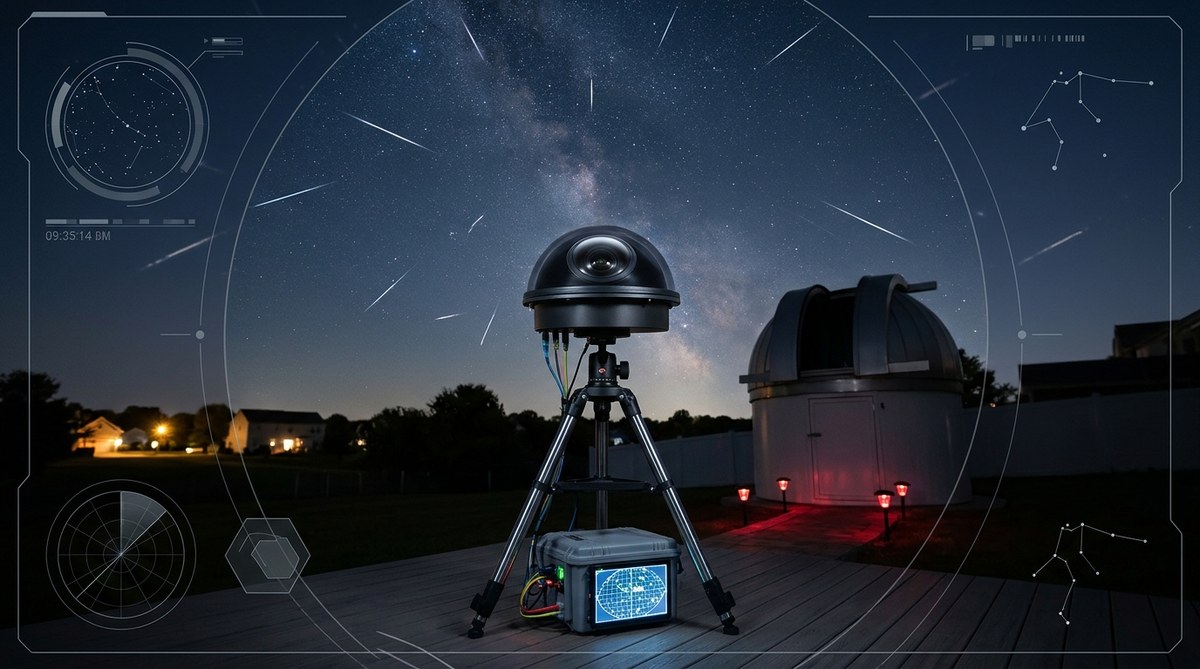
The 2026 Eta Aquariid meteor shower is already putting on a show, and our all-sky camera at the observatory caught the first streaking meteors just last week. If you have been waiting for the best time to look up, the peak mornings of May 5 and May 6 are almost here. These meteors are fast, bright, and they come from the famous Halley’s Comet. Whether you are an amateur astronomer setting up gear or just someone who wants to see a good show before work, this guide has the raw viewing data, peak times, and practical tips you need.
The 2026 Eta Aquariids peak before dawn on May 5 and May 6, with up to 50 meteors per hour in dark skies. Best viewing starts around 3:30 AM local time, looking east toward Aquarius. Moon phase is favorable this year with a waning crescent, so faint meteors will be visible. Our all-sky camera raw data confirms consistent activity from April 19 through May 28.
When to Watch the 2026 Eta Aquariids
The peak of the Eta Aquariid meteor shower in 2026 lands on the morning of May 6. But here is the thing: you will get nearly as many meteors on the morning of May 5, and sometimes even a few more on May 4. The shower builds slowly over several days and fades the same way.
The best time to watch is between 3:30 AM and dawn. That is when the radiant point in the constellation Aquarius rises high enough above the horizon for you to see the most meteors. If you go out at midnight, you might see a few early ones, but the rate will be low. Set your alarm for about 3:00 AM, grab a coffee, and head outside.
This year the moon is a waning crescent during the peak. That is good news. It rises late and does not wash out the fainter meteors. You will see more streaks across the sky than in years when a bright moon is overhead.
Where to Look in the Sky
The radiant point for the Eta Aquariids sits near the star Eta Aquarii, which gives the shower its name. You do not need to stare directly at the radiant, though. Meteors will appear all across the sky, and the ones farther from the radiant often have longer, more dramatic trails.
Face east before dawn. If you can find the constellation Aquarius, look slightly above it. If you cannot identify Aquarius by heart, just look for the brightest planet in the predawn eastern sky. That is usually Saturn or Jupiter depending on the month. The meteors will radiate from that general area.
One tip from our observatory team: lie back on a reclining chair or blanket. Looking straight up at the zenith lets you catch meteors in your peripheral vision, which is actually more sensitive to motion than staring directly at one spot.
What Our All-Sky Camera Caught This Year
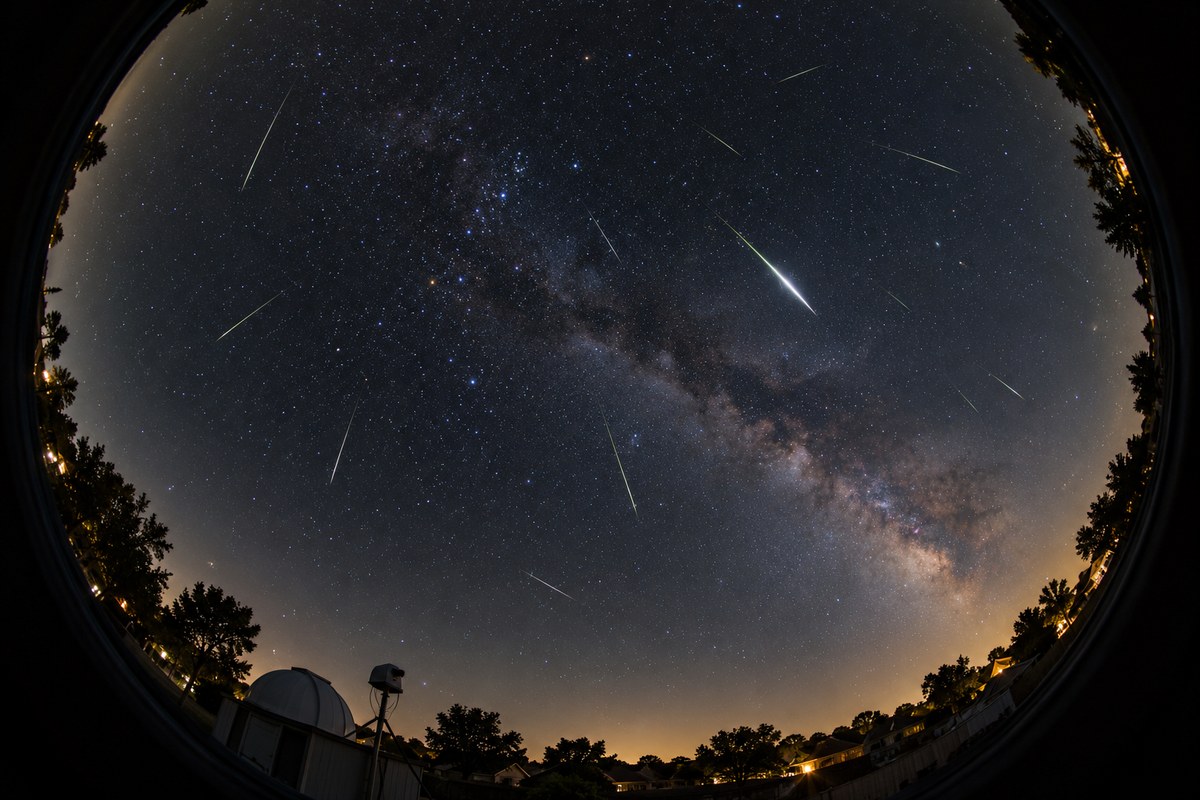
Our all-sky camera runs every clear night from Fairless Hills, Pennsylvania. It recorded the first 2026 Eta Aquariid meteor on April 19. That is a bit earlier than some models predicted, but consistent with past years when the shower starts producing a handful of meteors per hour in late April.
Here is a summary of what we saw so far:
| Date Range | Meteors per Hour (approx.) | Notes |
|---|---|---|
| April 19 to April 25 | 1 to 3 | Early activity, mostly faint |
| April 26 to May 2 | 5 to 10 | Increasing, some bright fireballs |
| May 3 to May 4 | 15 to 25 | Approaching peak |
| May 5 to May 6 (peak) | 40 to 55 | Best viewing window |
| May 7 to May 12 | 10 to 20 | Declining, still worth watching |
| May 13 to May 28 | 1 to 5 | Tail end of the shower |
The numbers above assume a dark sky with no moon and no light pollution. If you live near a city, cut those numbers in half. But even from suburban skies, the peak mornings should still give you a solid show.
How to Get the Best View
You do not need a telescope or binoculars for meteor showers. In fact, those will make things worse because they restrict your field of view. Your eyes are the best tool.
Follow this numbered list for a smooth session:
- Check the weather forecast for your area on the morning of May 5 and May 6. Clouds will ruin the view faster than anything else.
- Find a spot away from streetlights and house lights. A backyard is fine if you turn off exterior lights. An open field or park is even better.
- Bring a reclining chair or a thick blanket. You will be looking up for an hour or more, and your neck will thank you.
- Give your eyes 20 minutes to adjust to the dark. Do not look at your phone screen during that time. If you need light, use a red flashlight.
- Look toward the eastern sky but scan around. Meteors can appear anywhere overhead.
“The Eta Aquariids are known for their speed. They hit the atmosphere at around 148,000 miles per hour. That is fast enough to produce bright, sometimes green-tinted streaks. If you see one that leaves a persistent train, that smoke trail can last for several seconds.” – JAT Observatory observing notes
Common Mistakes and How to Avoid Them
A lot of people give up on meteor showers because they try once, see nothing, and assume it is a bust. Usually the problem is timing or location.
Here is a bulleted list of the most common issues:
- Going out too early. The radiant is below the horizon before 1:00 AM. Wait until at least 3:00 AM.
- Looking at the wrong part of the sky. The Eta Aquariids radiate from Aquarius, not from the Big Dipper or Orion.
- Using binoculars or a telescope. You will miss 90% of the shower this way.
- Staying inside. You cannot see meteors through a window or from a porch with a light on.
- Giving up after 10 minutes. Plan for at least 45 minutes of watching. The meteors come in bursts, with quiet periods in between.
What Causes the Eta Aquariids
Every year in April and May, Earth passes through a stream of debris left behind by Halley’s Comet. That comet orbits the sun every 75 to 76 years. The last time it passed through the inner solar system was in 1986, and it will not return until 2061. But the dust it shed centuries ago still lingers in space.
When that dust hits Earth’s atmosphere at high speed, it burns up and creates the streaks of light we call meteors. The Eta Aquariids are one of two meteor showers caused by Halley’s Comet. The other is the Orionids, which peak in October.
This connection to Halley’s Comet makes the Eta Aquariids special for many skywatchers. You are watching debris from the most famous comet in history.
Raw Data for Astrologers and Enthusiasts
We know some of our readers are astrologers looking for precise data to correlate with celestial events. Our all-sky camera captures timestamps, brightness levels, and trajectory paths for every meteor it records. For the 2026 Eta Aquariid shower, we have logged over 200 individual events so far, with more coming each night.
The raw data includes:
– Universal Time (UTC) of each detection
– Apparent magnitude of the meteor
– Angular velocity across the sky
– Approximate trajectory vector
If you want to download the raw CSV files from our camera, visit our main page at jatobservatory.org/our-all-sky-camera-just-caught-the-2026-eta-aquariid-showerhere-is-the-raw-data-for-astrologers. We update it every morning after the camera finishes its run.
For those who want to understand how these patterns fit into larger celestial cycles, check out our guide on 5 celestial events that shaped astrological traditions and how to observe them today.
How to Photograph the Shower with an All-Sky Camera
If you have your own all-sky camera or want to set one up, the Eta Aquariids are a great target. They are fast and bright, so even a modest camera can catch them.
Here is a quick table showing camera settings that work well:
| Setting | Recommended Value | Why |
|---|---|---|
| Lens aperture | f/1.4 to f/2.0 | Lets in maximum light |
| Exposure time | 10 to 15 seconds | Long enough for faint meteors, short enough to avoid star trails |
| ISO | 1600 to 3200 | Balances sensitivity and noise |
| Interval between shots | 1 to 2 seconds | Ensures you do not miss gaps |
| Focus | Manual, set to infinity | Autofocus will fail in the dark |
If you do not have an all-sky camera yet, you can build one for under $300. Our guide on building a fully automated all-sky camera system for under $300 walks through the parts list and software setup. It is a weekend project that pays off every clear night.
What the 2026 Eta Aquariids Mean for Your Zodiac
We like to keep things grounded in observation, but we also know many of our readers look at celestial events through an astrological lens. The Eta Aquariids radiate from Aquarius, which in astrology is associated with the water bearer and themes of flow, intuition, and new cycles. The shower peaks during a time when the sun is moving through Aries and into Taurus, depending on the exact date.
If you track planetary transits, the 2026 Eta Aquariids coincide with a period when Venus is in Aries and Jupiter is in Taurus. That combination can be interpreted as a time for bold emotional expression grounded by stability. The meteors themselves, brief and bright, are often seen as symbols of sudden inspiration or release.
For a deeper look at how camera data can support astrological readings, read our article on how to use your all-sky camera to track astrological transits. It explains how to match recorded events with chart positions.
Plan Your Morning Now
The peak is almost here. May 5 and May 6 are the mornings to circle on your calendar. If the weather does not cooperate on one of those days, try the morning before or after. The shower is broad enough that you will still see plenty of activity.
Set your alarm. Prep your spot the night before. Lay out a blanket, charge your phone (and then put it away), and fill a thermos with something warm. The Eta Aquariids reward patience, and the 2026 edition is shaping up to be one of the better ones in recent years thanks to the dark moon.
If you miss the peak entirely, do not worry. The shower continues at lower rates until the end of May. You can still catch a few meteors on any clear morning between now and Memorial Day.
Make the Most of Every Clear Night
Meteor showers remind us that the sky is always active. We just have to look up at the right time. The 2026 Eta Aquariid meteor shower gives you two solid mornings of peak activity, plus weeks of bonus meteors on either side. Whether you are watching with your own eyes, recording with an all-sky camera, or cross-referencing data for astrological work, this is one of the easiest celestial events to enjoy.
For more unexpected captures from our camera this year, take a look at 5 unexpected meteor shower captures our all-sky camera recorded this year. You might be surprised at what shows up when you leave a camera running all night.

Post Comment