5 Unexpected Meteor Shower Captures Our All-Sky Camera Recorded This Year
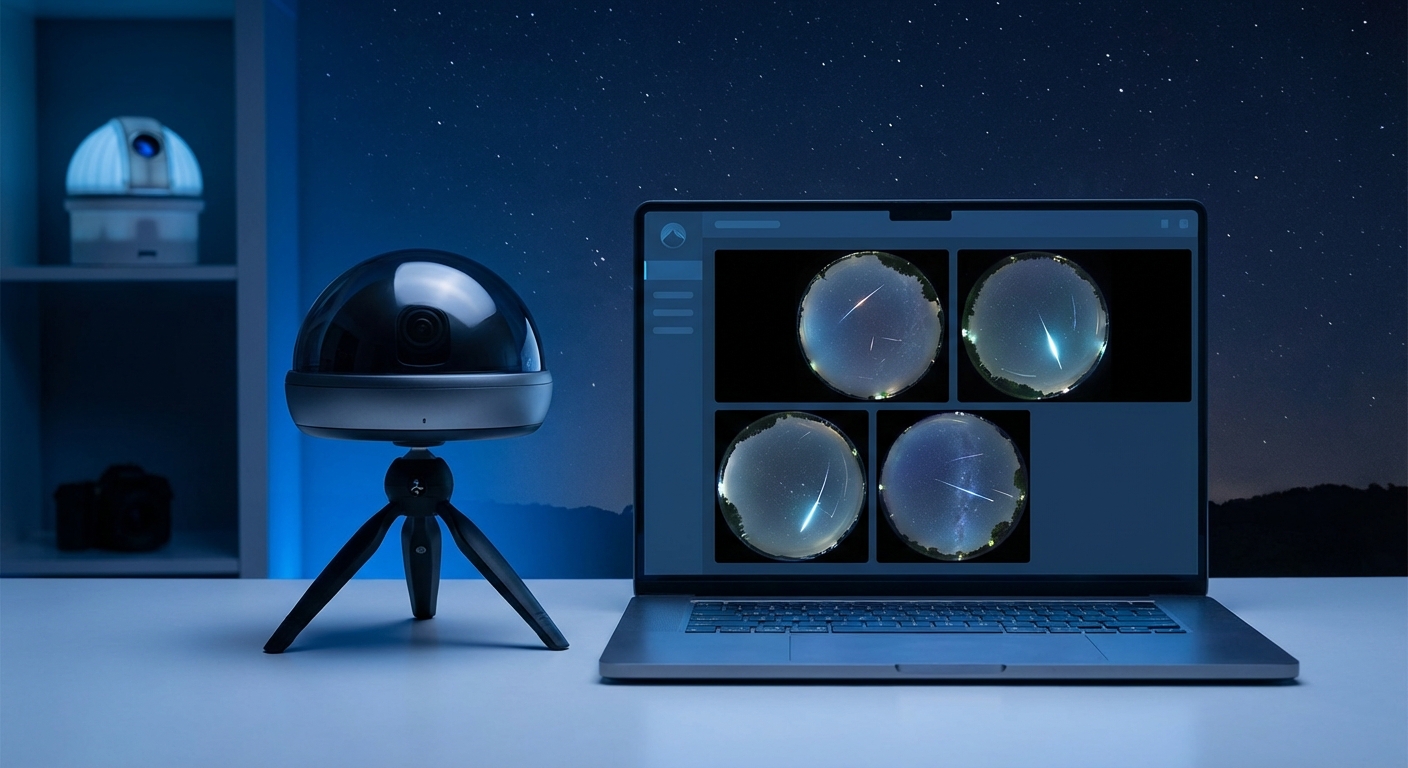
Watching a bright streak flash across the night sky is thrilling. Capturing that same moment on camera? Even better. All-sky cameras have changed how we document meteor showers, recording events that human eyes might miss and preserving celestial moments that last only seconds.
All-sky cameras automatically record meteor showers throughout the night, capturing unexpected celestial events without constant monitoring. These systems use wide-angle lenses, sensitive sensors, and specialized software to detect and save meteor footage. Setting up your own camera requires understanding exposure settings, light pollution challenges, and proper equipment positioning to document both predicted and surprise meteor activity effectively.
Why all-sky cameras excel at meteor documentation
Traditional cameras point at one small section of sky. You might wait hours and miss the best meteors by looking the wrong direction.
All-sky cameras solve this problem completely.
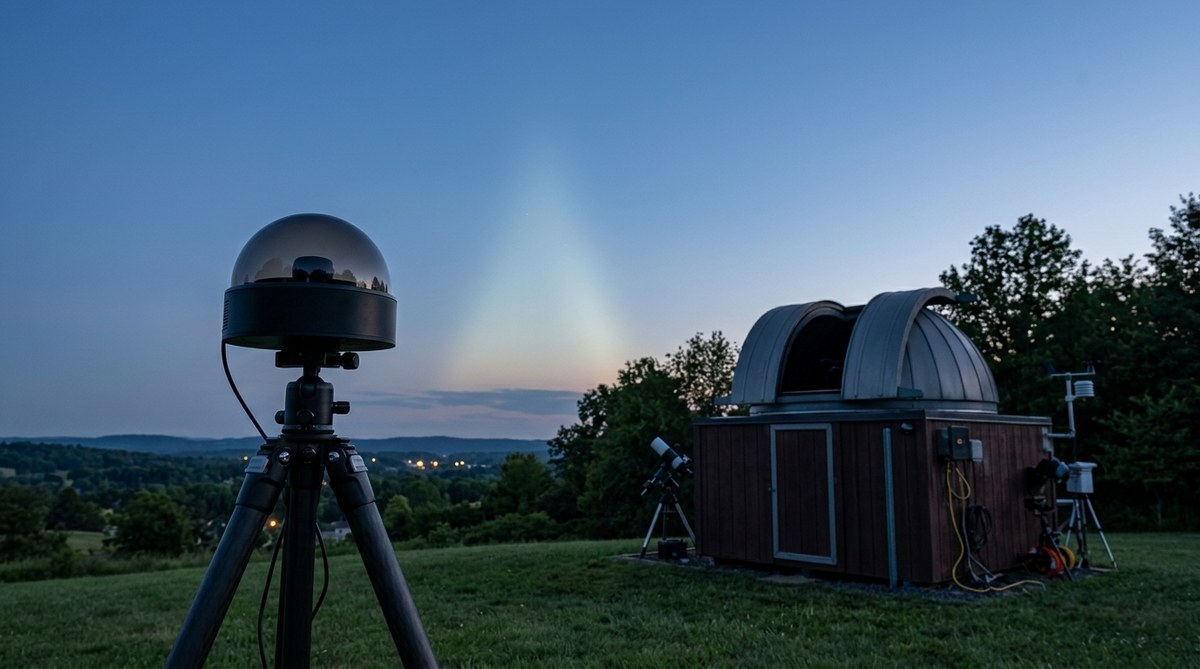
These systems use fisheye lenses that capture the entire visible sky dome. Every meteor that appears above your location gets recorded, regardless of where it streaks across the heavens.
The automation matters just as much as the coverage. Most meteor activity happens between midnight and dawn, when you’d rather be sleeping. Your camera keeps working while you rest, creating a complete record of the night’s activity.
Modern all-sky systems also include motion detection software. The camera doesn’t just record everything blindly. It identifies moving objects, saves those clips, and discards empty frames. You wake up to a folder of actual meteor captures instead of hours of static sky footage.
Setting up your meteor capture system
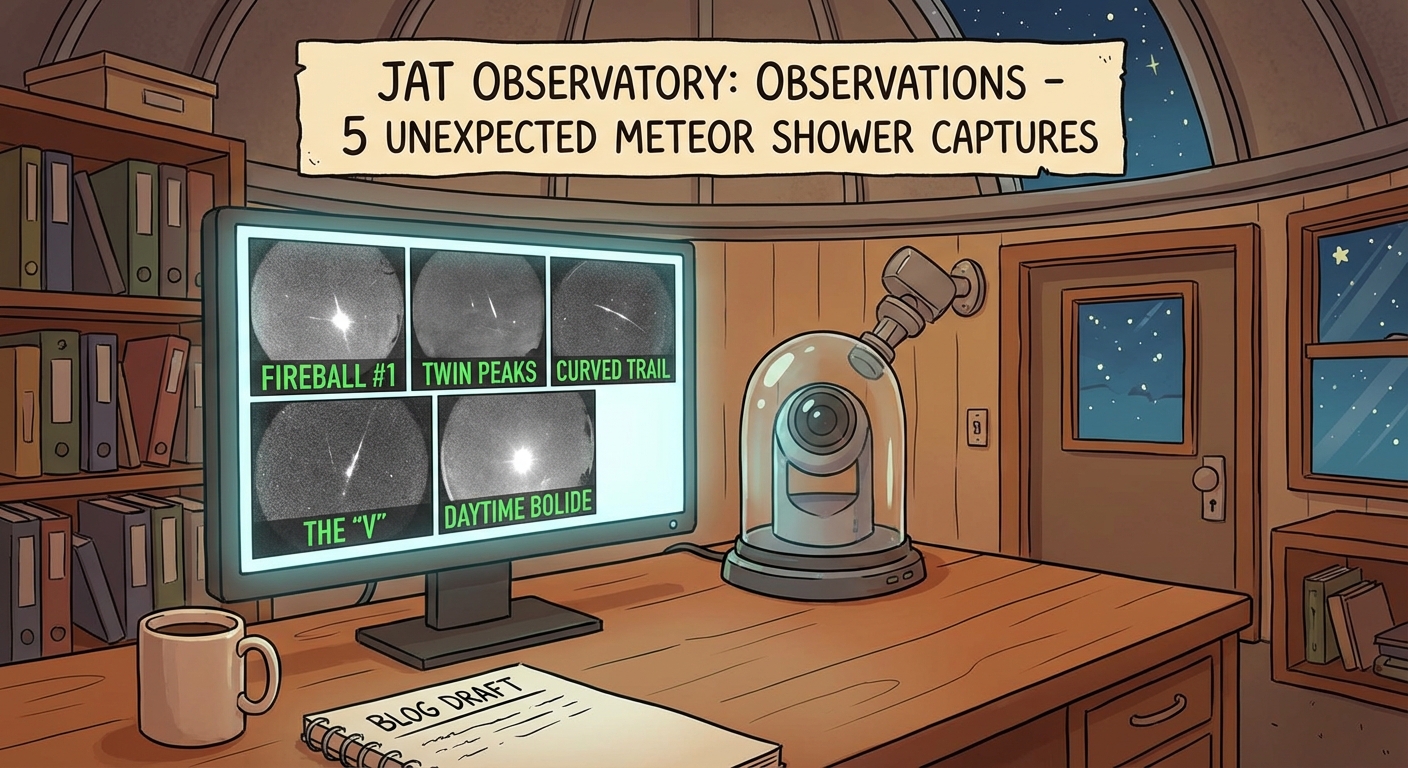
Getting started with meteor photography requires specific equipment and careful positioning. Here’s what actually works.
Camera and lens requirements
Your sensor sensitivity matters more than resolution. Meteors are faint and fast. A camera with good low-light performance will capture meteors that a higher-resolution but less sensitive camera misses entirely.
Look for these specifications:
- ISO capability up to 3200 or higher without excessive noise
- Manual exposure control for long exposures
- Weatherproof housing rated for outdoor use
- Reliable power source for all-night operation
- Storage capacity for several gigabytes per night
The lens determines your sky coverage. A true fisheye lens (180 degrees or wider) captures horizon to horizon. Cheaper wide-angle lenses might only cover 120 degrees, leaving significant sky areas unmonitored.
Location and mounting considerations
Light pollution ruins meteor captures more than any other factor. Even a single bright streetlight in your frame can wash out faint meteors and create glare that obscures the sky.
Find the darkest spot you can access regularly. Backyards work if you live in rural areas. For suburban locations, you might need to mount your camera on a roof or in an elevated position above nearby lights.
Point your camera straight up at the zenith. Tilting toward any horizon increases atmospheric interference and light pollution in that direction.
Secure mounting prevents vibration. Wind, nearby traffic, or even animals bumping your tripod will create motion blur that ruins your captures. Use a heavy-duty mount bolted to a stable surface.
Exposure settings that work
Start with these baseline settings and adjust based on your results:
- Set your ISO between 1600 and 3200 depending on light pollution levels
- Use the widest aperture your lens allows (f/2.8 or faster works best)
- Set exposure time between 15 and 30 seconds per frame
- Configure continuous shooting mode to eliminate gaps between exposures
- Disable any in-camera noise reduction that delays between shots
Shorter exposures freeze meteor motion better but require higher ISO. Longer exposures gather more light but might blur fast meteors into thick streaks instead of crisp lines.
Test different combinations on clear nights before major meteor showers arrive. Your ideal settings depend on your specific equipment and location.
What makes captures unexpected and valuable
Predicted meteor showers like the Perseids or Geminids get plenty of attention. Photographers prepare for these annual events and capture impressive footage.
The real excitement comes from unexpected meteor activity.
Outbursts happen when Earth passes through a denser section of debris than predicted. A shower forecasted for 20 meteors per hour suddenly produces 100. Or a minor shower that usually goes unnoticed flares into a spectacular display.
New meteor streams occasionally appear. Comets break apart, creating debris fields we encounter for the first time. These events can’t be predicted until they happen.
Sporadic meteors (not associated with any known shower) can be just as bright and impressive as shower meteors. Your all-sky camera captures these random events that would otherwise go undocumented.
Fireballs are extremely bright meteors that can cast shadows and leave persistent trains glowing for seconds after the meteor itself vanishes. These rare events provide valuable scientific data when captured on camera.
“Every meteor capture adds to our understanding of the solar system’s debris environment. Amateur observations fill gaps in professional monitoring networks and sometimes catch events that no other camera recorded.” — International Meteor Organization
Common mistakes that ruin meteor footage
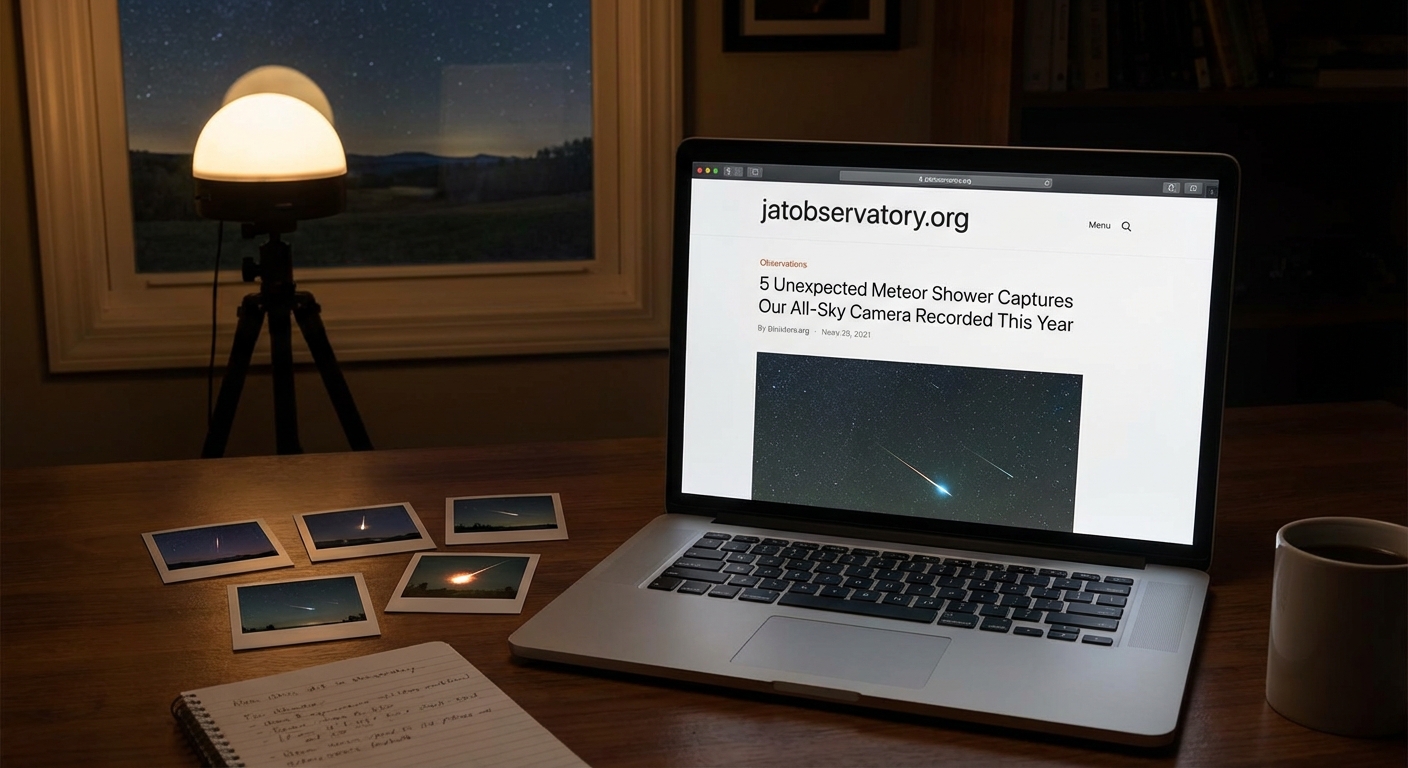
Even experienced astrophotographers make errors that compromise their meteor captures. Avoid these problems.
| Mistake | Why It Fails | Better Approach |
|---|---|---|
| Focusing on infinity at night | Autofocus hunts in darkness, manual focus is guesswork | Focus on a distant daytime object, then tape the focus ring |
| Forgetting dew protection | Moisture condenses on cold lenses, blurring everything | Use dew heaters or shields around the lens |
| Maxing out ISO unnecessarily | Excessive noise obscures faint meteors | Use the lowest ISO that still captures stars clearly |
| Recording in compressed video | Compression artifacts hide faint meteors | Shoot individual frames or use high-bitrate video |
| Ignoring moon phase | Bright moonlight washes out all but the brightest meteors | Plan captures around new moon periods |
Lens fogging happens more often than you’d expect. Temperature drops after sunset cause moisture to condense on your lens. Check your camera regularly during the night or install a dew prevention system.
Battery life catches many photographers off guard. Cold temperatures reduce battery capacity significantly. A battery that lasts four hours in summer might die after two hours on a cold autumn night. Always use a larger battery or external power source.
Processing and reviewing your captures
You’ll generate massive amounts of data. A single night might produce thousands of frames. Reviewing everything manually takes too long.
Meteor detection software automates the review process. Programs like UFO Capture, MetRec, or RMS (Raspberry Pi Meteor Station) analyze your footage frame by frame, identifying potential meteors and flagging them for review.
These programs work by comparing consecutive frames and detecting new bright objects that weren’t present before. The software saves clips containing motion and discards static frames.
False positives happen regularly. Aircraft, satellites, insects, and even birds trigger detection algorithms. You’ll need to review flagged clips and confirm actual meteors versus other objects.
Create a catalog of your confirmed captures. Note the date, time, apparent brightness, duration, and whether the meteor belonged to a known shower. This documentation helps you track patterns over time and contributes to citizen science projects.
Share your best captures with meteor observation networks. Organizations like the American Meteor Society and International Meteor Organization collect reports and footage from observers worldwide, using this data to map meteor shower activity and identify new streams.
Technical improvements worth considering
Basic all-sky systems work well, but several upgrades can improve your results significantly.
Adding a second camera provides stereo observation. Two cameras separated by several miles can triangulate meteor positions, calculating actual altitude and trajectory instead of just apparent position. This requires coordination with another observer but produces scientifically valuable data.
Upgrading to a more sensitive camera captures fainter meteors. Astronomy cameras designed for deep-sky imaging often perform better than standard cameras for meteor work. The investment is substantial but worthwhile for serious documentation.
Installing automated cloud detection prevents wasted recording time. Software can monitor sky conditions and pause recording when clouds obscure the sky, saving storage space and battery power.
Connecting to time synchronization systems ensures accurate timestamps. GPS-based time servers or network time protocols keep your camera’s clock accurate to within milliseconds. Precise timing helps correlate your observations with other observers and identify the same meteors captured from multiple locations.
Weather and seasonal considerations
Meteor photography depends entirely on clear skies. Cloud cover ruins everything.
Check weather forecasts carefully before major meteor showers. Use specialized astronomy forecasts that predict cloud cover, atmospheric transparency, and seeing conditions rather than general weather reports.
Some meteor showers peak during seasons with typically poor weather. The Geminids peak in mid-December when many northern locations face frequent clouds and storms. The Perseids peak in August when summer thunderstorms are common.
Have realistic expectations about capture rates. Even during major showers, you might only record one meteor every few minutes. Minor showers might produce one good capture per hour.
Temperature extremes affect equipment performance. Batteries drain faster in cold weather. Electronics can overheat during summer nights if enclosed in weatherproof housings without ventilation.
Winter observations offer advantages despite the cold. Nights are longer, giving you more recording time. Atmospheric conditions are often more stable, producing sharper captures.
Building a year-round observation schedule
Consistent monitoring throughout the year captures more unexpected events than focusing only on major showers.
Plan your observation nights around moon phases. The week surrounding new moon provides the darkest skies. Avoid the week around full moon unless you’re specifically targeting very bright meteors.
Major annual meteor showers worth monitoring:
- Quadrantids (early January)
- Lyrids (late April)
- Eta Aquarids (early May)
- Perseids (mid-August)
- Orionids (late October)
- Leonids (mid-November)
- Geminids (mid-December)
Between these predicted showers, maintain regular monitoring. Sporadic meteors occur every night. Unexpected outbursts can happen anytime.
Track your capture success over time. Note which nights produced the most meteors, what equipment settings worked best, and what problems you encountered. This log becomes invaluable for improving your system.
Your captures contribute to real science
Amateur meteor observations fill important gaps in professional monitoring networks. Research institutions operate limited numbers of all-sky cameras, leaving large geographic areas unmonitored.
Your footage helps scientists understand meteor shower evolution, identify new streams, and track how existing showers change over time. Meteor orbits shift gradually due to planetary perturbations, and long-term amateur observations document these changes.
Bright fireballs captured on camera can help locate meteorite falls. When multiple observers capture the same fireball from different locations, triangulation can determine where fragments might have landed. Several meteorite recoveries have succeeded thanks to amateur camera networks.
Submit your observations to established meteor organizations. The American Meteor Society maintains a fireball reporting system. The International Meteor Organization coordinates global meteor monitoring. Both organizations welcome amateur contributions.
Your data becomes part of a larger picture. Individual observations might seem modest, but thousands of amateur observers collectively create comprehensive monitoring that no single institution could achieve alone.
Making the most of every clear night
Every hour of clear darkness offers potential captures. Even nights without predicted meteor activity can surprise you.
Set up your system before sunset. Getting everything running while you can still see clearly prevents fumbling with equipment in the dark. Test your focus, check your framing, and verify that recording is actually working.
Monitor your system periodically through the night if possible. Check that the lens hasn’t fogged, the camera is still recording, and no unexpected light sources have appeared in your frame.
Keep a simple observation log. Note sky conditions, equipment settings, and any problems encountered. These notes help you troubleshoot issues and improve your setup over time.
Don’t get discouraged by cloudy nights or equipment failures. Meteor photography requires patience and persistence. Some nights produce amazing captures. Other nights yield nothing. The unpredictability is part of what makes unexpected meteor shower captures so rewarding.
When the sky puts on a show
The best meteor captures happen when you’re ready and the universe cooperates. Your all-sky camera stands watch every clear night, waiting for those moments when something extraordinary streaks across the sky.
Each capture tells a story. A fragment of ancient comet debris meeting Earth’s atmosphere at tremendous speed, burning brilliantly for just a few seconds before vanishing forever. Your camera preserves that moment, turning a fleeting event into a permanent record.
Keep your camera running. Keep learning from each night’s results. The next unexpected meteor shower could happen tomorrow night, and you’ll be ready to capture it.

Post Comment