Why Your All-Sky Camera Can Help You Verify the Astrological Weather of the 2026 Lunar Nodes
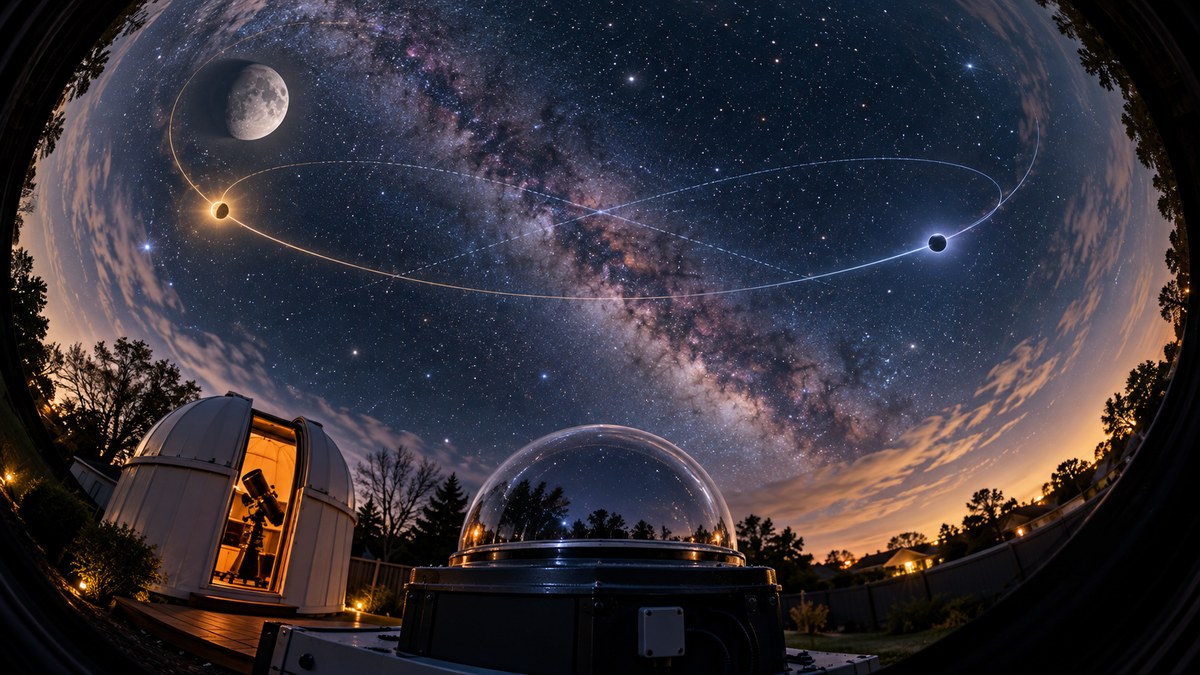
Your all-sky camera captures the entire dome of the sky every night. It sees meteors, satellites, cloud patterns, and the slow drift of planets across the zodiac. For amateur astrologers who want to move beyond ephemeris tables, that camera becomes a verification tool. The 2026 lunar nodes mark a year when the Moon’s path crosses the ecliptic at potent angles, and many astrologers predict noticeable shifts in collective moods, weather patterns, and personal cycles. Instead of just reading about it, you can watch it happen in real time.
Your all-sky camera can serve as a live observatory for astrological weather during the 2026 lunar nodes. By tracking the Moon’s position against the fixed stars, noting cloud formations during key transits, and recording planetary conjunctions, you build a personal database that either supports or challenges published predictions. This is citizen science applied to astrology.
What Makes the 2026 Lunar Nodes Special
The lunar nodes are the points where the Moon’s orbit intersects the ecliptic plane. In 2026, the North Node moves through Pisces and into Aquarius, while the South Node travels through Virgo and into Leo. Astrologers describe this shift as a change in collective focus. The North Node in Pisces relates to intuition, creativity, and emotional release. When it enters Aquarius, themes of community, innovation, and boundaries come forward.
But these are abstract ideas until you see them reflected in the sky. Your all-sky camera can capture the Moon passing directly over specific fixed stars in Pisces and Aquarius. You can note which nights feel charged. You can compare your observations with the astrological weather predictions published for 2026.
How Your All-Sky Camera Verifies Astrological Weather
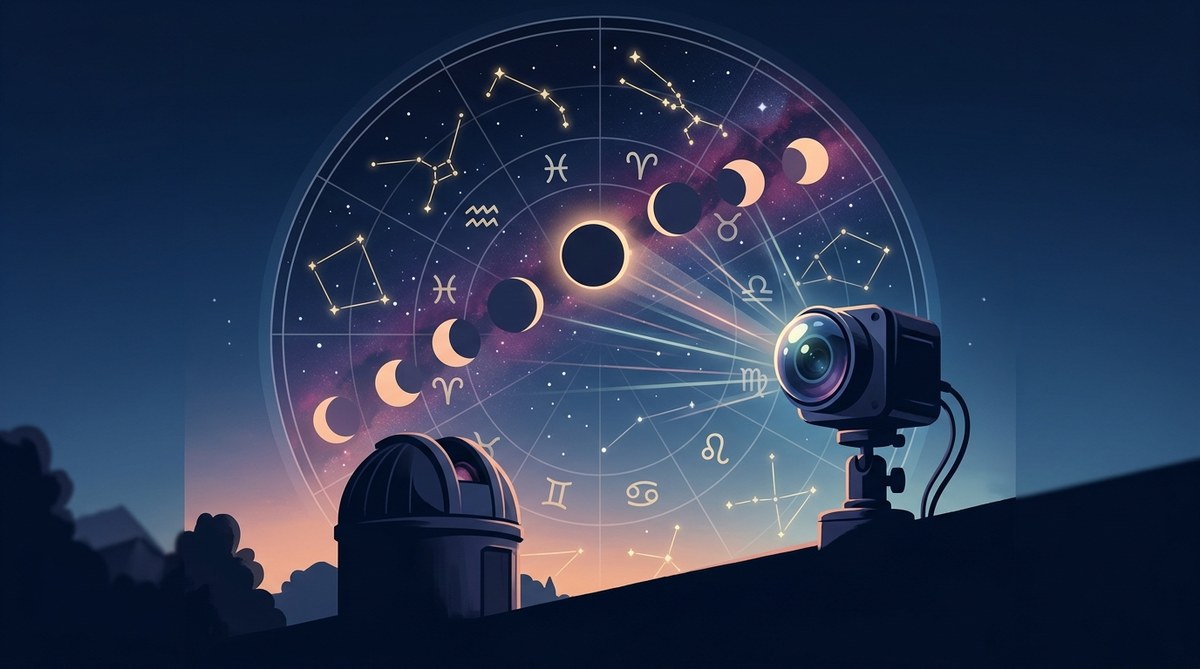
Astrological weather refers to the energetic climate created by planetary positions. It is not literal weather, but many astrologers believe it influences emotional and social atmospheres. The 2026 lunar nodes are expected to create periods of intensity around eclipses, especially the solar eclipse in February and the lunar eclipse in August.
Here is how your camera helps you test this idea:
- Set your camera to capture a frame every 30 seconds throughout the night. This gives you a time-lapse record of the Moon’s path.
- Overlay the captured frames with the known positions of the lunar nodes for each date. Free software like Stellarium can generate an overlay for comparison.
- Note any unusual atmospheric phenomena during node transits. Glowing cloud formations, unusual star twinkling, or persistent haze can be documented.
- Keep a log of how you feel during those nights. Subjective experience matters in astrological verification.
- Compare your logs with the published astrological weather forecasts for the 2026 lunar nodes to see if patterns emerge.
Common Mistakes When Using a Camera for Astrology
Many people set up an all-sky camera and expect immediate revelations. That is not how it works. The real value comes from consistent recording over months. Here are the most common pitfalls and how to avoid them.
| Mistake | Why It Hurts | Better Approach |
|---|---|---|
| Using auto exposure settings | The camera adjusts brightness, hiding subtle changes in sky quality. | Lock exposure at a fixed value for the entire night. |
| Ignoring clouds | Clouds are dismissed as noise, but they can reflect moonlight in interesting ways. | Record cloud cover percentage alongside node positions. |
| Forgetting to timestamp | Without exact times, you cannot correlate observations with ephemeris data. | Use software that embeds GPS time into each frame. |
| Expecting dramatic events | Most node transits look ordinary. | Look for subtle shifts in sky color, clarity, and star visibility. |
What to Look for During Key 2026 Node Transits
The 2026 lunar nodes create specific dates worth watching. Mark these on your calendar and make sure your all-sky camera is running.
- February 6, 2026: Solar eclipse near the North Node in Pisces. The Moon covers the Sun, and your camera will record the sudden darkness and any changes in animal behavior or atmospheric stillness.
- August 12, 2026: Lunar eclipse near the South Node in Virgo. The Moon turns red. Your camera can capture the color shift and any unusual cloud formations around the eclipsed Moon.
- October 2026: The North Node enters Aquarius. Watch for the Moon passing near the Aquarius star Sadalmelik. Note if the sky feels different during this transition.
During these dates, pay attention to the following:
- The presence of noctilucent clouds, which are rare and often linked to upper atmosphere changes.
- The visibility of zodiacal light, which is the sunlight scattered by dust in the plane of the solar system.
- The behavior of satellites and meteors. Do they seem more frequent or brighter during node transits?
“The sky is not a passive backdrop. It is an active participant in the astrological weather. Your camera is the witness.” – Anonymous amateur astrologer from the JAT Observatory forum
Setting Up Your Verification Workflow
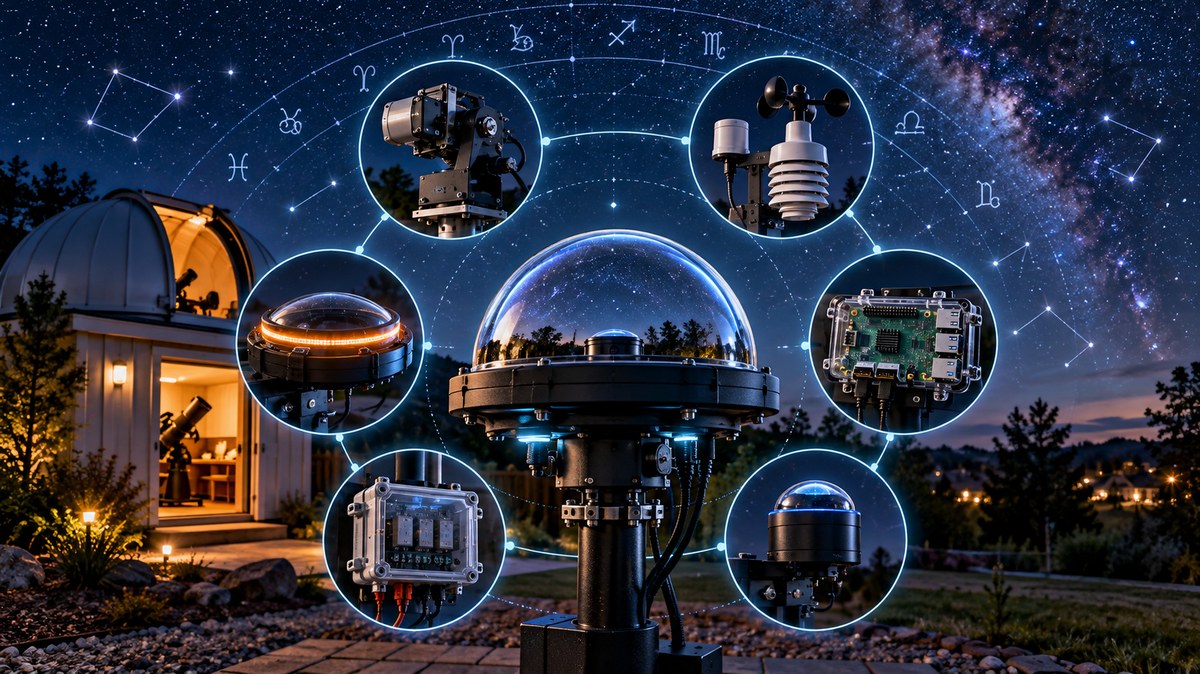
You do not need expensive equipment. A basic all-sky camera with a Raspberry Pi and a wide-angle lens can do the job. The key is automation and consistency.
- Build or buy a camera that captures at least 5 megapixel resolution. This is enough to identify bright stars and the Moon’s phase.
- Use software that creates a keogram, which is a vertical strip of the sky over time. Keograms reveal the Moon’s path and cloud cover in a single image.
- Store your images on a local drive or cloud service. Label them by date and node position.
- Once a month, review the keograms alongside the astrological weather predictions for the 2026 lunar nodes.
For a complete guide on hardware, read our article on building an all-sky camera system to monitor celestial patterns year-round. If you are on a budget, check out building a fully automated all-sky camera system for under $300.
The Practical Steps to Start Tonight
You do not need to wait for a special event. The lunar nodes are always active. Here is a numbered process to begin:
- Set up your all-sky camera and confirm it captures the entire horizon without obstructions.
- Download a free ephemeris tool that shows the lunar node positions for your location.
- Program your camera to start recording at sunset and stop at sunrise.
- Each morning, check the previous night’s footage. Note the Moon’s position relative to the node.
- Write down one observation each week. It can be as simple as “Moon passed near the node, sky was clear, no unusual activity.”
- After three months, look for patterns. Do certain node positions correlate with more cloud cover? Do you feel more energetic on those nights?
- Share your findings with online communities. Your data adds to the collective understanding of astrological weather.
Why This Matters for Your Practice
Astrology is often criticized for lacking empirical grounding. By using an all-sky camera, you bring a scientific method to your spiritual practice. You are not just believing predictions. You are testing them. The 2026 lunar nodes offer a perfect window for this because they shift slowly and predictably. You have time to gather data.
If your observations match the published astrological weather, you gain confidence in the system. If they do not match, you learn something about how the nodes express in your local sky. Either outcome is valuable.
Turning Observations into a Personal Record
Keep a notebook or a digital log. For each observation, record the date, time, node position, sky conditions, and your subjective mood. Over the year, this becomes a personalized almanac. You can look back and see how the 2026 lunar nodes affected your life.
For example, you might notice that during the South Node in Virgo, you felt more critical and detail-oriented. Your camera might show that the Moon passed through Virgo during those weeks, and the sky was exceptionally clear. This correlation does not prove causation, but it builds a personal narrative that enriches your astrological understanding.
Your Camera as a Bridge Between Worlds
The all-sky camera sits at the intersection of astronomy and astrology. It records the same sky that ancient astrologers watched. The 2026 lunar nodes are a modern way of describing ancient cycles. Your camera gives you direct access to those cycles.
Do not worry about getting it perfect. A slightly blurry image is better than no image. A missed night is not a failure. The goal is to build a habit of looking up and paying attention. The astrological weather of the 2026 lunar nodes is happening whether you record it or not. But recording it turns you from a passive reader into an active participant.
Start Watching the Nodes Tonight
Set your camera up before sunset. Let it run all night. In the morning, look at the footage. Find the Moon. Note where it was in the sky. Check the node position for that date. Write down what you see. Do this for a week. Then a month. Then the whole year.
By the end of 2026, you will have a unique record of how the lunar nodes expressed in your piece of the sky. That record is yours. No one else has it. And it will help you understand the astrological weather in a way that no book or website can teach.
For more on capturing specific events, read about 5 unexpected meteor shower captures our all-sky camera recorded this year and how our observatory captured the 2026 total lunar eclipse and what it means for your zodiac.
The sky is waiting. Your camera is ready. The 2026 lunar nodes are calling. Go outside and look up.

Post Comment