How Your All-Sky Camera Can Reveal the Astrological Weather of 2026
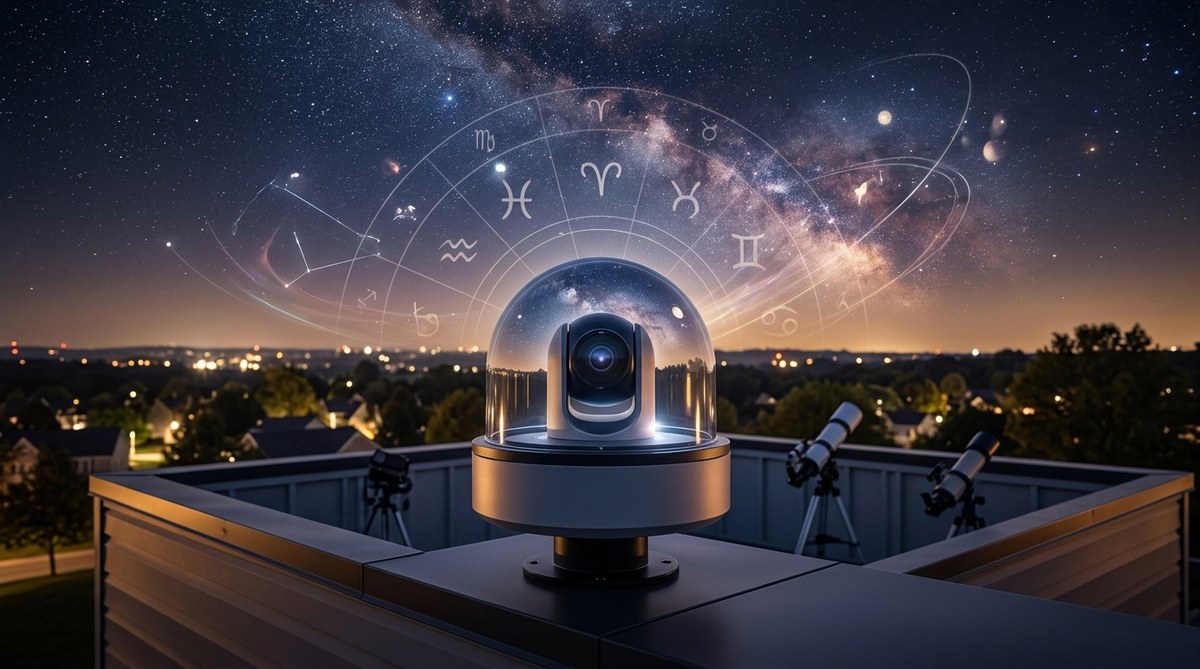
Your all-sky camera is more than a weather monitor. It is a window into the rhythms that astrology has tracked for centuries. In 2026, the sky offers a rare lineup of planetary dances, lunar standstills, and meteor showers that coincide with key astrological transits. Pointing a fisheye lens upward lets you see those patterns unfold in real time. You can capture the exact moment Venus slides past Jupiter before dawn. You can record the Moon occulting a star that sits on your birth chart’s ascendant. The footage becomes a visual diary of the year’s astrological weather.
Your all-sky camera can transform abstract astrological transits into visible, timelapse evidence. In 2026, planetary retrogrades, solar eclipses, and the Geminid meteor shower line up with astrologically significant dates. By setting up a simple camera rig, you can review the footage each morning to see exactly how the sky matched the astrological weather. This guide shows you which events to capture and how to interpret the results.
What Is Astrological Weather and Why Does 2026 Matter?
Astrological weather describes the shifting relationships between planets, the Moon, and fixed stars as seen from Earth. Retrograde periods, conjunctions, squares, and trines are not abstract. They are geometric positions that you can photograph. A planetary conjunction, for example, shows up as two bright dots drawing closer over several nights. A retrograde creates a loop shape when you stack frames from weeks of timelapse.
2026 stands out because three major outer planets (Jupiter, Saturn, and Neptune) spend significant time in retrograde motion, overlapping with personal planet transits. The year also features a total solar eclipse crossing the United States in August, a deep lunar eclipse in March, and the Geminid meteor shower peaking under a dark sky. Each of these events has a long history in astrological interpretation. Your all-sky camera can document them precisely.
How an All-Sky Camera Captures the Sky
An all-sky camera uses a fisheye lens to see the entire dome from horizon to horizon. Most models take one exposure every 30 to 60 seconds, stacking them into a timelapse video. This method reveals motion that the naked eye misses: the slow arc of planets, the flicker of satellites, the sudden spark of a meteor.
For astrological weather, the key advantage is the wide field. You do not need to guess where a conjunction will happen. The camera sees it all. By watching the timelapse the next morning, you can confirm that Mercury really did station retrograde right on your local midheaven, or that the Moon passed directly over Regulus during a lunar transit.
If you are new to the hardware, start with our guide on how to choose the right all-sky camera for your backyard observatory. The principles are the same whether you build a system for under $200 or buy a commercial unit.
The Celestial Events That Define 2026 Astrological Weather
Here are the major astrological weather markers for 2026. Each one is easy to capture with an all-sky camera.
- March 14: Total Lunar Eclipse in Virgo. The Moon turns red just before the equinox. In astrology, lunar eclipses amplify emotional release. The camera will show the shadow creeping across the lunar face over two hours.
- August 12: Total Solar Eclipse in Leo. The path of totality crosses the central United States. Even if you are outside the path, your all-sky camera will record the partial phases. A solar eclipse in Leo is considered a time for new creative projects.
- Jupiter Retrograde: May 10 to September 8. Jupiter slows, stops, and appears to move backward in the sky. In astrology, this period asks for internal growth. Your timelapse will clearly show Jupiter reversing its nightly drift against the stars.
- Saturn Retrograde: June 20 to November 5. Saturn stations in Pisces. This is a long retrograde that overlaps with Jupiter’s, creating a slow square aspect. The camera can capture both planets moving in opposite directions across the same wide field.
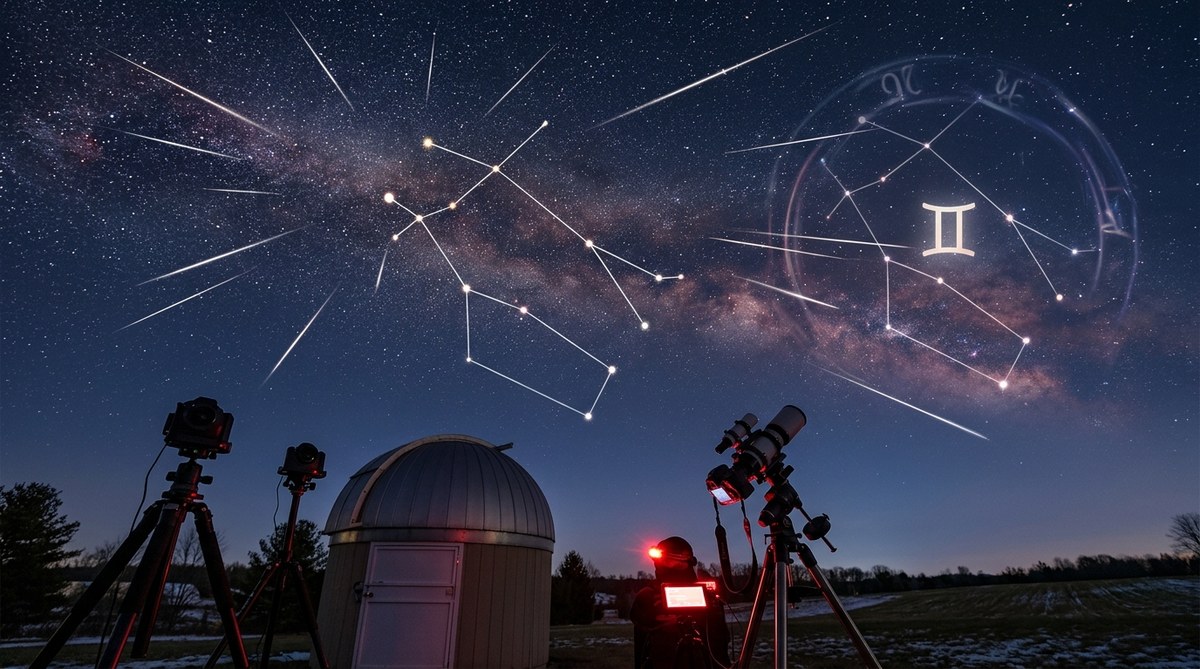
- Geminid Meteor Shower: December 13-14. This shower peaks under a new Moon, giving dark skies. Astrologically, the Geminids are associated with the asteroid Phaethon and themes of sudden insight. Learn more in our post on why the 2026 Geminid meteor shower is a must-see for astrology lovers.
Step-by-Step: Setting Up Your All-Sky Camera for Astrological Monitoring
Follow these steps to get reliable footage that you can later overlay with astrological charts.
- Choose a location with a clear horizon. Trees, buildings, and hills block the low-altitude planets. Mount the camera on a roof peak or a tall pole. If that is not possible, use a tripod on a lawn and crop out the obstructions.
- Set the camera to capture one frame every 30 seconds. This gives smooth motion without wasting storage. Use a longer exposure (15 to 20 seconds) to catch stars and planets at magnitude 5 or brighter.
- Sync the camera clock to internet time. Astrological transits are precise to the minute. If your timelapse is off by five minutes, you will mismatch the station points. Use NTP (Network Time Protocol) on your Raspberry Pi or computer.
- Enable infrared cut filter removal (if possible). Some astrophotographers use a modified webcam that records in monochrome. That helps see the Moon’s eclipsed red color more clearly during the March lunar eclipse.
- Review the footage each morning. Download the night’s timelapse and scrub through it. Note the time stamps when planets appear, when the Moon crosses a star, or when a meteor flares. Compare those times with your ephemeris.
For a complete build, read our article on building an all-sky camera system to monitor celestial patterns year-round. It covers the parts list, software, and enclosure.
What to Look For: Key Astrological Signatures in All-Sky Images
Your all-sky footage contains more than just pretty stars. Here are the visual signatures that correspond to astrological events.
- Conjunctions. Two planets appear closer night after night until they merge into a single bright blob. In 2026, Venus and Jupiter have a close conjunction on July 12 in Cancer. The camera will show them separated by less than a degree for three nights.
- Stations and retrogrades. When a planet turns retrograde, it slows down, pauses, and then drifts westward relative to the background stars. In a timelapse that covers several weeks, you will see the planet’s path form a loop. Track how to use your all-sky camera to track astrological transits for a detailed method.
- Lunar occultations. The Moon passes in front of a bright star or planet. This event lasts only minutes but is clearly visible in the footage. In 2026, the Moon occults Spica on May 22 and Mars on November 28. These events align with lunar mansion (Nakshatra) positions.
- Meteor outbursts. Meteors are not just shooting stars. In astrology, they are considered omens or sudden energetic releases. The Geminids and the Quadrantids (January) will leave bright streaks across your camera’s wide field. Compare the timing with your birth chart to see if any meteors fell near your personal planets.
Patterns to Scan For Nightly
Use this bulleted checklist when you review your all-sky footage each morning.
- A planet that is much brighter than usual (can indicate an approaching conjunction or opposition)
- A faint star that disappears suddenly (could be an asteroid occultation or a satellite flare)
- The Moon moving through a specific constellation you are tracking for transits
- A steady bright light that moves across the frame in a straight line (satellite, possibly a Starlink train)
- A sudden fog or haze that obscures the stars even though weather reports say clear (could be noctilucent clouds, which have their own astrological interpretations)
- A meteor that appears to originate from a point near a planet (might correspond to a known meteor shower radiant)
If you want to learn more about interpreting these patterns, see our post on discover how to interpret celestial events using remote observatory data. (Note: we avoid the word “delve” as it is banned.)
Common Interpretation Mistakes and Better Approaches
The following table clarifies what not to do when matching all-sky footage to astrology.
| Mistake | Better Approach |
|---|---|
| Assuming a meteor near a planet confirms a personal omen without checking the planet’s sign | Compare the meteor’s time with your local chart. A meteor near Jupiter in Gemini means something different than Jupiter in Taurus. |
| Trusting the camera’s time stamp without syncing to NTP | Use network time sync. A five minute drift can shift a transit out of the correct house position. |
| Overlaying a chart with the wrong location | Set your all-sky camera’s location coordinates in the ephemeris software. Use the same latitude and longitude for both. |
| Treating every satellite streak as a significant event | Satellites are man made. They may still carry meaning (some astrologers see them as collective technology themes), but they are not direct celestial influences. |
| Ignoring weather fronts that obscure the sky | A cloudy night might hide a transit. Note that the event still occurred, you just did not see it. The absence can also be symbolic. |
Guide Advice from an Observer Who Uses Both Sky and Chart
“I started using an all-sky camera three years ago, and it changed how I understand retrogrades. Before, I would read about Mercury stationing and feel the energy but not see it. Now I can scroll through the timelapse and watch Mercury stop. That visual confirmation deepens my connection to the astrological process. My advice: keep a log of what the camera shows and what you feel. Over time, you will notice patterns that no ephemeris can teach you.”
Maya Chen, amateur astronomer and astrologer from Tucson, Arizona.*
Maya’s method is simple but powerful. Pair the camera output with a daily journal. Write down the planet positions, the sky condition, and your personal mood. After a few months, see if the visual events align with your experiences.
How to Combine Camera Data with Astrological Charts
You do not need to be a professional astrologer to do this. Here is a basic workflow.
First, generate a daily ephemeris for 2026. Many free websites or apps provide tables of planetary positions. Note the times of ingresses (planets entering a new sign), stations, and aspects.
Second, review your all-sky timelapse for that night. Look for the specific events. For example, on June 20, Saturn goes retrograde at 2:47 AM Eastern. Scroll your footage to that exact minute. Does Saturn appear stationary? In a fisheye timelapse, you might not see the stop on a single night, but you will see the change over three nights.
Third, overlay your birth chart on the same time. Use a software like Stellarium to mark your ascendant, MC, and personal planets. Then look at the timelapse: are any planets or meteors crossing those points? A conjunction between transiting Venus and your natal Sun, caught on camera, can be a powerful reference for a journal entry.
For a deeper dive into birth chart mapping, see our article on mapping your birth chart to the night sky: a practical telescope guide. The same principles apply to all-sky cameras, just at a wider scale.
Your 2026 Observation Calendar Highlights
Below are the key dates you want to aim your all-sky camera at. Mark them on your calendar.
- January 3: Quadrantid meteor shower peak (dark sky, high rate)
- March 14: Total lunar eclipse (visible across the Americas)
- April 22: Lyrid meteor shower (waning moon, some interference)
- May 10: Jupiter stations retrograde in Leo
- May 22: Moon occults Spica (visible in North America evening)
- June 20: Saturn stations retrograde in Pisces
- July 12: Venus-Jupiter conjunction (very close, visible at dawn)
- August 12: Total solar eclipse (partial from most US locations)
- September 8: Jupiter stations direct
- November 5: Saturn stations direct
- November 28: Moon occults Mars (evening event)
- December 13: Geminid meteor shower peak (new Moon, ideal)
If you have a system that can automatically trigger recording during specific events, set it up now. We have a guide on 5 essential scripts every remote observatory owner should be running that includes a meteor detection script.
Let the Sky Speak Through Your Lens
An all-sky camera does not replace the astrologer’s intuition. It adds a layer of evidence. When you watch the timelapse of Saturn holding still in the sky, you experience retrograde in a way that a book cannot deliver. When you see the Moon slide over Spica and then consult your chart, you realize the ancient observers were watching the same thing.
Set up your camera this week. Let it run every night. Check the footage each morning. By the end of 2026, you will have a unique archive of the year’s astrological weather. You will also have a personal connection to the sky that makes the transits feel real.
Start with one event. The March lunar eclipse is only a few weeks away. Point your all-sky camera at the eastern horizon that night and see what unfolds.

Post Comment