5 Celestial Events Observed from Fairless Hills That Align with Major Astrological Transits in 2026
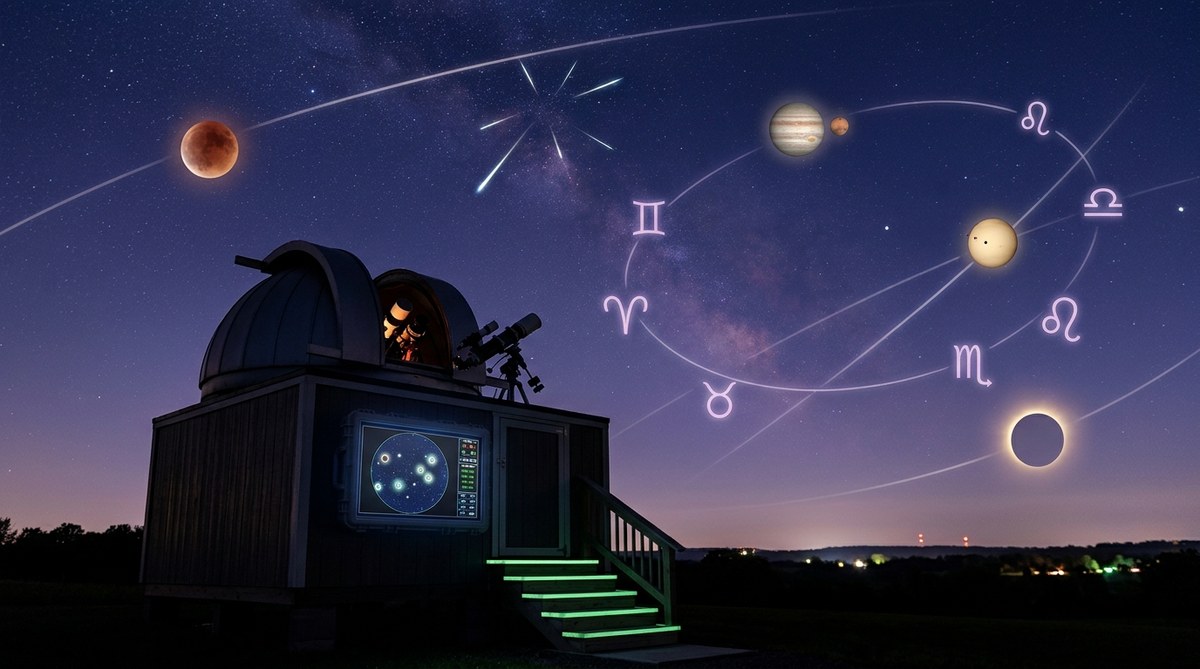
The skies above Fairless Hills, Pennsylvania, are about to put on a show. Whether you are an astrology enthusiast who tracks every retrograde or a backyard astronomer who just loves a bright night sky, 2026 is packed with moments that feel written in the stars. You do not need a fancy telescope to enjoy them. A pair of binoculars, a clear horizon, and a little planning are all it takes. And the best part? Each of these events carries astrological weight, giving you both a scientific and a spiritual reason to look up.
Fairless Hills residents have front-row seats to five major celestial events in 2026 that also mark powerful astrological transits. From a total lunar eclipse in March to the Geminid meteor shower in December, each event offers a chance to connect physical skywatching with cosmic timing. A simple plan and local dark-sky spots make them all accessible.
The Total Lunar Eclipse in March Signals a Full Moon in Virgo
On the night of March 3, 2026, the Moon will slide completely into Earth’s shadow. For Fairless Hills, the eclipse begins just after sunset, with totality lasting over an hour. The Moon will take on a deep coppery red, often called a blood moon.
Astrologically, this eclipse happens at the Full Moon in Virgo, opposing the Sun in Pisces. That axis deals with service versus surrender, detail versus dreams. A total lunar eclipse in Virgo often brings a moment of clarity about daily routines, health, and how you help others. It is a time to release perfectionism.
To watch from Fairless Hills, head to a spot with a low southeastern horizon. The township’s park near the Delaware River offers open skies. Bring a blanket and warm drink. You will not need any equipment, but binoculars can reveal the Earth’s shadow creeping across crater rims.
The Jupiter-Venus Conjunction in Pisces: April’s Love Note
Around April 25, 2026, the two brightest planets will appear almost on top of each other in the evening sky. Jupiter and Venus will be separated by less than a degree, a sight so brilliant it often gets mistaken for a UFO. In Fairless Hills, look west about 45 minutes after sunset.
In astrological terms, this conjunction takes place in Pisces, the sign of boundless emotion and intuition. Venus and Jupiter together are considered the “benefics,” amplifying love, abundance, and creative inspiration. This alignment is a classic one for starting a relationship, signing a contract, or simply allowing yourself to dream bigger.
For the best view, find a clear western horizon. The hills around Falls Township offer good sightlines. If you have a small telescope, the view of both planets in the same eyepiece is unforgettable. If you want to capture the moment, read our guide on how to photograph the Andromeda galaxy from a suburban backyard observatory for tips that also apply to planetary conjunctions.
Mars at Opposition in Cancer: January’s Fiery Stand
January 16, 2026, brings Mars opposite the Sun, meaning the Red Planet is closest to Earth and shines its brightest all year. From Fairless Hills, Mars will rise around sunset and remain visible all night. It will look like a steady orange star in the constellation Cancer.
Astrologically, Mars in Cancer is about protective aggression, defending home and family. An opposition (full Moon energy) highlights where you assert yourself versus where you need to nurture. This transit might stir up strong feelings about where you live or who you care for.
No special equipment is needed, but a 4-inch telescope will show Mars’ polar ice cap. If you have never seen a planet through a telescope, this is the easiest time to try. Our article on what can you actually see through a 10-inch telescope in Pennsylvania will help you set realistic expectations.
The Saturn-Neptune Conjunction in Aries: June’s Visionary Meeting
June 10, 2026, is a date astrologers have been waiting for. Saturn and Neptune will conjoin in Aries for the first time since 1989. From Fairless Hills, the pair will be low in the eastern sky before dawn, about 20 minutes before sunrise.
Saturn represents structure, boundaries, and reality. Neptune dissolves boundaries and represents dreams, illusion, and spirituality. When they meet in Aries, the drive for individuality (Aries) is both constrained and inspired. This transit can help you build real-world structures around your creative visions, or it can reveal where you have been fooling yourself.
You will need binoculars or a small telescope to separate the two planets. They will appear as two dots very close together. The best local viewing spot is from the higher ground near Oxford Valley, where light pollution is lower. For help planning early-morning observations, check our complete guide to remote desktop solutions for observatory control — even if you are just using a phone app.
The Geminid Meteor Shower: December’s Cosmic Fireworks
The Geminids peak on the night of December 13–14, 2026, and Fairless Hills is in an excellent location to watch. Unlike many meteor showers, the Geminids are active all night because their radiant (in Gemini) is high in the sky after midnight. You could see 100–150 meteors per hour under dark skies.
Astrologically, the Sun is in Sagittarius during the Geminids, a fire sign focused on adventure and truth. The meteors themselves are pieces of asteroid 3200 Phaethon, but many people assign them a “shooting star” wish magic. In the context of Gemini (communication, intellect), this shower is a great time to set intentions around learning, writing, or speaking your truth.
To maximize your count:
– Find a dark spot away from streetlights. Core Creek Park is a popular choice.
– Lie flat on a blanket or reclining chair.
– Let your eyes adjust for 20 minutes; do not look at your phone.
– Dress warmly — December nights in Pennsylvania are cold.
If you want to record the shower automatically, consider building a system. Our guide on building an all-sky camera system to monitor celestial patterns year-round walks you through the process.
How to Prepare for Any Celestial Event in Fairless Hills
Here is a numbered list of steps you can follow for each of the five events:
- Check the exact time and direction for Fairless Hills using a phone app like Stellarium or SkySafari.
- Scout a location the day before — look for eastern, western, or southern horizons depending on the event.
- Gather gear: if the event is after dark, bring a red flashlight, warm layers, and a chair.
- Check local weather. Clear skies are essential. The Pennsylvania humidity can ruin a view.
- Invite a friend. Sharing the experience makes it more meaningful, especially for astrological discussions.
Common Mistakes to Avoid When Skywatching
| Mistake | Why It Hurts | Better Approach |
|---|---|---|
| Using a bright white flashlight | Ruins night vision for 30 minutes | Use a red filter or red LED light |
| Starting observation too late | You miss the best part (e.g., eclipse totality) | Set an alarm 30 minutes ahead |
| Relying on city parks with lights | Light pollution washes out faint objects | Drive 10 minutes north to darker areas |
| Forgetting to check moon phase | Bright moon ruins meteor shower visibility | Plan for moonless or crescent moon nights |
| Not aligning astrological intent | You miss the psychological benefit | Set an intention before the event |
“The best celestial events are the ones you actually go outside to see. You can read about them all year, but the memory of standing under a meteor shower or watching a lunar eclipse with your own eyes is irreplaceable. And when you tie it to your personal astrology, the sky becomes a mirror.” — JAT Observatory observer, Fairless Hills
Bringing the Year of Sky into Your Practice
2026 is a gift for anyone who loves both astronomy and astrology. Each of these five events gives you a reason to step outside, breathe the cool Pennsylvania air, and witness something that has been moving through the cosmos for millions of years. The total lunar eclipse asks you to release perfection. The Jupiter-Venus conjunction invites abundance. Mars opposition stirs protective love. Saturn-Neptune forces you to dream with discipline. And the Geminids remind you that even tiny dust grains can light up the sky.
You do not have to be an expert. You just have to look up. So pick one event, mark it in your calendar, and set up your spot in Fairless Hills. The stars will do the rest.

Post Comment