Watch the 2026 Mercury Retrograde Unfold in Real Time from Our All-Sky Camera
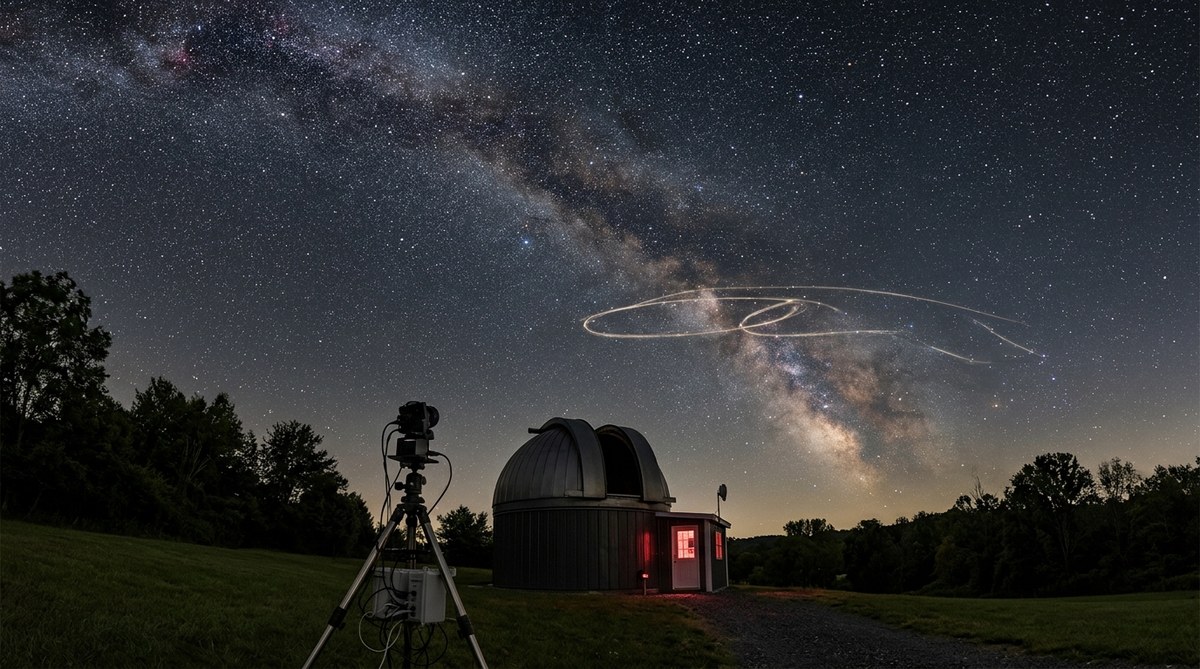
Mercury retrograde gets a bad reputation. You hear about communication breakdowns, travel delays, and tech glitches. But there is another side to this celestial event that most people miss. It is a stunning visual phenomenon that you can actually watch from your own backyard. In 2026, we are making it easier than ever to see Mercury reverse course in real time. Our all-sky camera at JAT Observatory is streaming the entire retrograde period live. Whether you follow astrology closely or just love watching planets move across the night sky, this is your chance to witness something special.
Mercury retrograde 2026 is not just an astrological event. It is a real astronomical motion you can see from Earth. Our all-sky camera streams the planet’s path live as it appears to move backward against the stars. This guide explains how retrograde motion works, when to watch, and how to connect what you see with your astrology practice. You will learn practical observation tips and get the exact dates for the 2026 retrograde periods.
What Mercury Retrograde Actually Looks Like from Earth
Mercury does not really move backward. That is the first thing to understand. The illusion happens because Earth and Mercury orbit the sun at different speeds. When Mercury laps us on the inside track, it appears to slow down, stop, and reverse direction against the background stars. Astronomers call this apparent retrograde motion.
From our all-sky camera, you will see Mercury trace a loop or a zigzag pattern over several weeks. The planet starts moving eastward through the constellations, then appears to halt at a stationary point. For the next few weeks, it drifts westward night after night. Then it stops again and resumes its normal eastward path.
This is not a subtle effect. With a clear sky and our live feed, you can watch the position shift noticeably from one night to the next. It is one of the most rewarding things to track with a remote observatory setup.
Mercury Retrograde 2026 Live: Key Dates and Viewing Windows
The 2026 retrograde periods follow a predictable pattern. Mercury retrogrades three to four times each year. Here are the exact windows for 2026.
| Retrograde Period | Start Date | Stationary Point | End Date | Best Viewing Time |
|---|---|---|---|---|
| First Retrograde | March 19 | March 29 | April 11 | Evening twilight, western sky |
| Second Retrograde | July 18 | July 27 | August 8 | Morning twilight, eastern sky |
| Third Retrograde | November 9 | November 18 | November 29 | Evening twilight, western sky |
Each retrograde lasts about three weeks. The stationary points are the most dramatic moments. That is when Mercury pauses and changes direction. Our all-sky camera captures these transitions in high detail.
For the best view, check the sky during twilight hours. Mercury never gets far from the sun, so it stays low near the horizon. The March and November retrogrades favor evening observers. The July retrograde is a morning event.
How to Watch the Retrograde Unfold on Our Live Feed
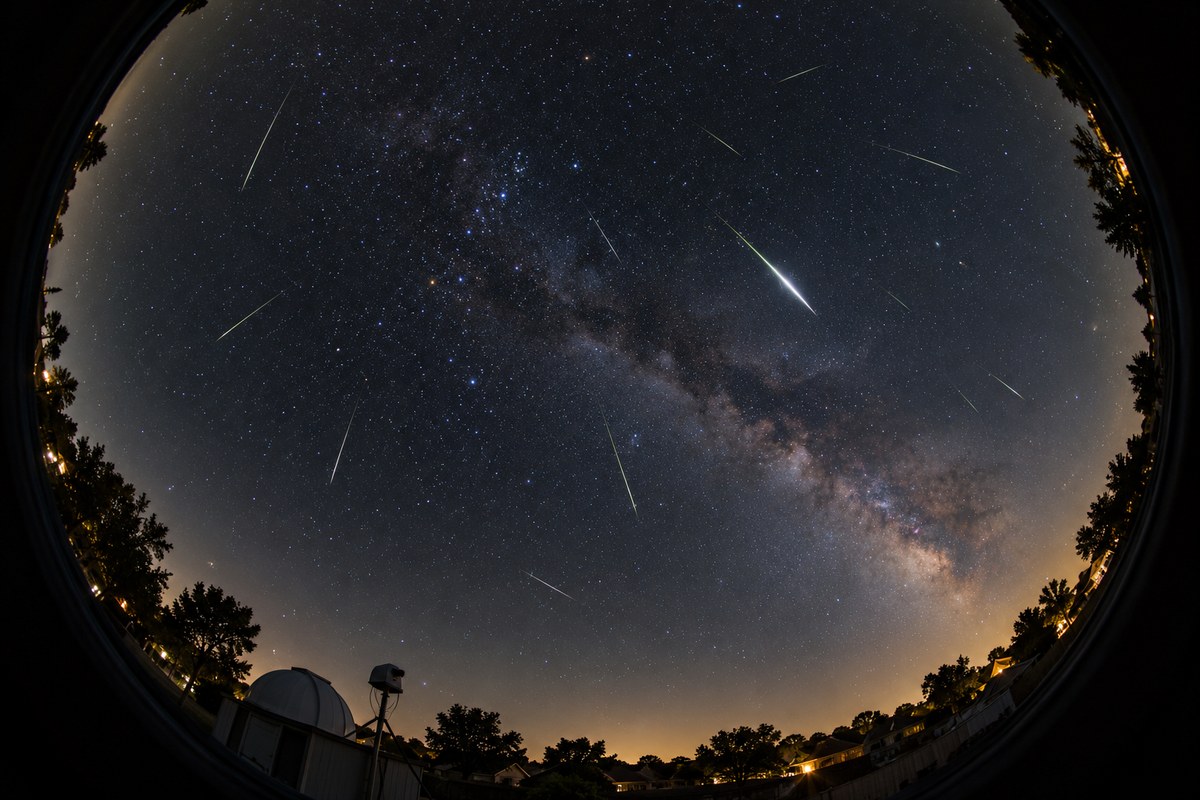
You do not need a telescope or any special equipment. Our all-sky camera runs every clear night from Fairless Hills, Pennsylvania. The camera uses a wide-angle lens that captures the entire sky dome. Mercury shows up as a bright dot moving through the constellations.
Here is how to get the most out of the live feed.
- Bookmark the live stream page. Visit jatobservatory.org/watch-the-2026-mercury-retrograde-unfold-in-real-time-from-our-all-sky-camera and save it to your browser.
- Check the weather. We only stream when the sky is clear. Use our weather dashboard to confirm conditions before tuning in.
- Look for the timestamp. Each frame shows the exact time of capture. Compare Mercury’s position from night to night to see the retrograde motion.
- Use the overlay guide. Our feed includes constellation lines and planet labels. This helps you spot Mercury even when the sky is bright.
- Watch during stationary points. The week around March 29, July 27, and November 18 offers the most dramatic shifts.
If you want to build your own system, check out our guide on building an all-sky camera system to monitor celestial patterns year-round. It covers everything from hardware to software.
Connecting the Live View to Your Astrology Practice
Astrology followers know Mercury retrograde as a time for reflection, revision, and patience. But seeing the actual motion adds a new layer of meaning. When you watch the planet pause and reverse, the astrological symbolism becomes tangible.
Many people find that tracking the retrograde visually helps them align their personal practice with the sky. You are not just reading about a transit in a chart. You are seeing the planet move through the same degrees of the zodiac that your birth chart references.
For a deeper look at how this works, read our article on understanding the impact of retrograde motion on astrology readings. It explains the connection between apparent motion and interpretive meaning.
Common Mistakes When Observing Mercury Retrograde
Even experienced observers make errors. Here are the pitfalls to avoid.
- Mistaking a bright star for Mercury. Venus, Jupiter, and Sirius can all outshine Mercury. Use a star chart or our overlay to confirm.
- Watching at the wrong time. Mercury is only visible during twilight. If you look at midnight, it will be below the horizon.
- Expecting dramatic daily jumps. The motion is subtle. You need to compare positions over several nights to see the shift.
- Forgetting about the stationary points. The most interesting part of the retrograde is the beginning and end. Do not tune in only during the middle.
- Ignoring weather. Clouds or haze can block Mercury even when the rest of the sky looks clear.
“The stationary points are where the magic happens. When Mercury stops and reverses, you are literally watching a celestial gear shift. That is the moment that matters most for both astronomers and astrologers.” – JAT Observatory team
What Your All-Sky Camera Can Reveal About the Retrograde
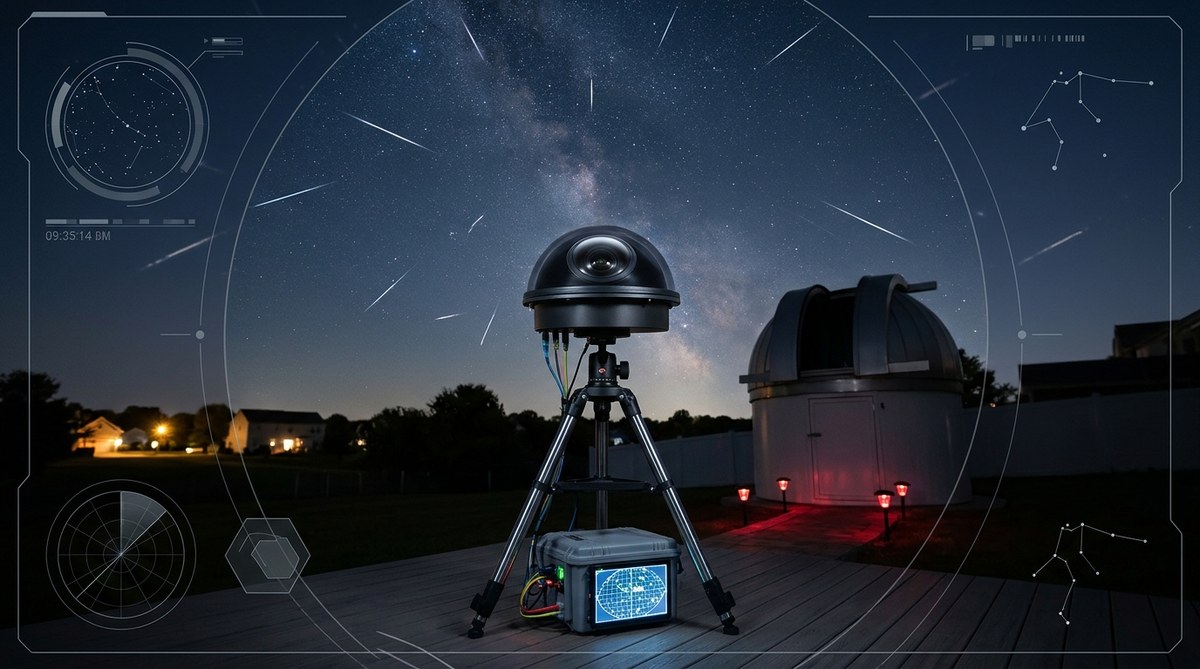
If you run your own remote observatory, Mercury retrograde is a fantastic target. The planet’s motion is predictable, bright enough for most cameras, and visually rewarding. Our setup uses a Raspberry Pi with a low-light camera module and a weatherproof enclosure. You can build something similar for under $300.
We have a full tutorial on building a fully automated all-sky camera system for under $300. It includes the parts list, assembly steps, and software configuration.
Once your camera is running, you can automate timelapse captures. Stack the images to create a composite showing Mercury’s full retrograde loop. That makes a stunning visual for your blog, social media, or personal records.
For more ideas on using your camera for astrological tracking, see our guide on how to use your all-sky camera to track astrological transits. It covers planetary motion, lunar phases, and zodiac constellations.
Why 2026 Is a Great Year for Mercury Retrograde Observation
The geometry works in our favor this year. All three retrograde periods occur when Mercury is well placed for mid-northern latitudes. The March and November events happen in the evening sky, which is more convenient for most viewers. The July retrograde is a morning event, but Mercury rises high enough to be easily visible.
The November retrograde is especially interesting. It coincides with the tail end of meteor shower season. You might catch a few Leonids or Taurids in the same frame as Mercury. Our all-sky camera has captured unexpected events before. Check out our post on 5 unexpected meteor shower captures our all-sky camera recorded this year for examples.
How to Interpret What You See
When you watch Mercury retrograde live, you are seeing the same phenomenon that ancient astronomers observed. They did not understand orbital mechanics, but they recognized the pattern. That pattern became the foundation for retrograde symbolism in astrology.
Here are a few things to notice while you watch.
- The retrograde loop always happens in the same zodiac signs each year. In 2026, Mercury retrogrades in Aries, Leo, and Scorpio.
- The planet appears brightest around the stationary points. That is when it is closest to Earth.
- The loop shape varies. Some retrogrades look like a straight line. Others form a tight zigzag. This depends on Mercury’s position relative to the ecliptic.
If you want to map what you see to your birth chart, read our practical guide on mapping your birth chart to the night sky. It shows you how to locate the planets and constellations that appear in your chart.
Making the Most of the Live Stream
Our all-sky camera runs automatically every night. But there are ways to enhance your experience.
- Set a reminder for the stationary points. March 29, July 27, and November 18 are the key dates. Mark them in your calendar.
- Compare frames from consecutive nights. Use the timestamp to align images. The shift is small but real.
- Share your observations. Tag us on social media when you spot Mercury. We love seeing what our community catches.
- Combine with other tools. Use a planetarium app like Stellarium to predict Mercury’s position. Then check our feed to confirm.
For a complete list of celestial events we track, see our article on 5 celestial events observed from Fairless Hills that align with major astrological transits in 2026.
Watching the Sky Changes Your Perspective
There is something grounding about seeing planetary motion with your own eyes. Mercury retrograde is often discussed in abstract terms. But when you watch it happen, the experience becomes personal. You understand why ancient cultures paid such close attention to the sky. The patterns are real, and they repeat with remarkable precision.
Our all-sky camera gives you a front row seat. Whether you are a seasoned astronomer or someone who just started following astrology, the live feed offers a direct connection to the cosmos. No filters, no predictions. Just the planet moving the way it always has.
So pick one of the 2026 retrograde periods. Tune in during the stationary point. Watch Mercury pause, reverse, and resume its path. Then think about how that rhythm might apply to your own life. The sky has been teaching us patience and cycles for thousands of years. The lesson is still there, waiting for you to look up.

Post Comment