How to Spot the 2026 Gemini Meteor Shower and What It Means Astrologically
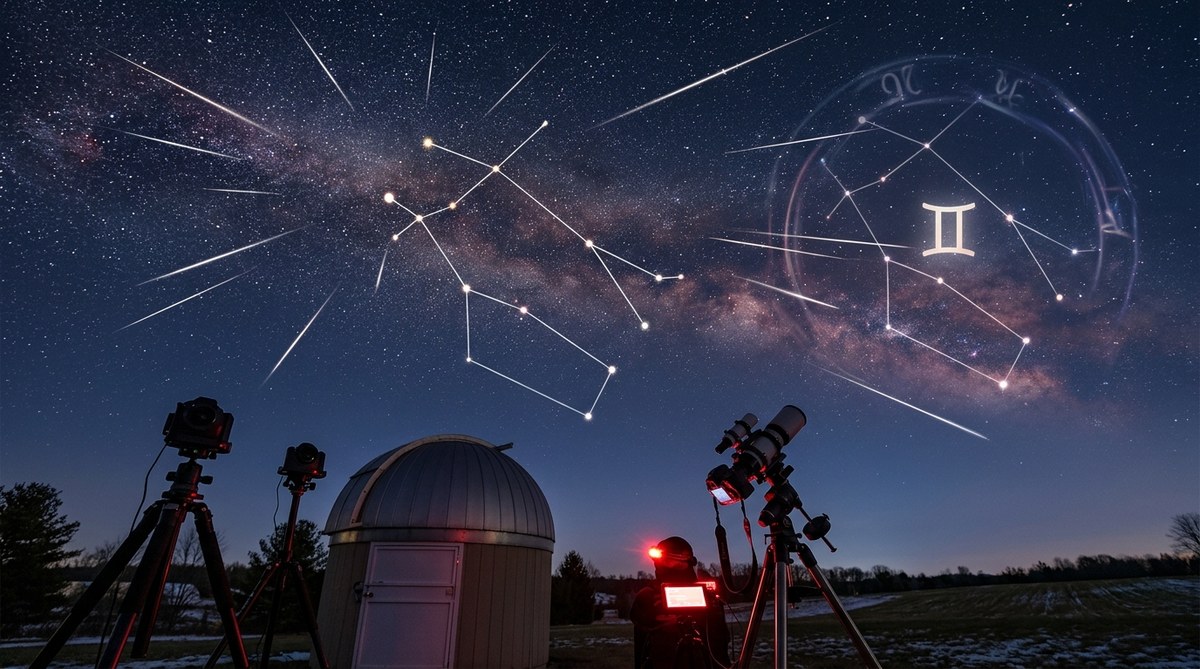
The December sky puts on a show that feels almost too good to be true. While you are bundled up against the cold, tiny grains of rock left behind by an asteroid turn into bright streaks of light. The Geminids 2026 meteor shower is widely considered the best and most reliable display of the year. Unlike many showers that require patience and luck, the Geminids often deliver 100 to 150 meteors per hour from a dark location. The best part? You do not need a telescope or any fancy gear. Just a warm coat, a clear patch of sky, and a little bit of planning.
The Geminids 2026 meteor shower peaks on the night of December 13 into the morning of December 14. With a new Moon providing dark skies, viewing conditions are nearly perfect. Look toward the Gemini constellation after midnight for the best show. Astrologically, this shower signals a time of release, creative energy, and alignment with your higher purpose.
When the Geminids Peak in 2026
The Geminids are active from early December through December 17, but the peak window is narrow. For 2026, the peak happens on the night of December 13 into the early morning of December 14. That is your best chance to see the highest number of meteors.
Here is why 2026 is special. The Moon will be a thin crescent that sets early in the evening. That means the sky will be dark and moonless during the peak hours after midnight. No moonlight to wash out the fainter streaks. This combination does not happen every year. In some years, a bright Moon ruins the show. In 2026, you get ideal conditions.
If you cannot stay up late on the 13th, the nights immediately before and after will still offer good activity. You might see 30 to 50 meteors per hour on December 12 and December 14.
Where to Look in the Sky
The shower is named after the constellation Gemini because that is where the meteors appear to radiate from. But here is a common mistake. Do not stare directly at the radiant point. Meteors near the radiant look short and stubby. The best views are about 45 degrees away from the radiant, where the streaks appear longer and more dramatic.
To find the radiant, locate the stars Castor and Pollux in Gemini. Those two bright stars are easy to spot in the eastern sky after midnight. Once you find them, look about halfway up the sky in any direction. Let your eyes wander.
A simple way to plan your session:
- Check the weather a few days before. Clouds are your biggest enemy.
- Find a dark spot away from streetlights and porch lights. A local park or a rural road works well.
- Bring a reclining chair or blanket so you can lie back and look up without straining your neck.
- Give your eyes 20 minutes to adjust to the dark. No phone screens. No flashlights. Red light only if you need to see.
- Look toward Gemini but scan the whole sky. Meteors can appear anywhere.
What Makes the Geminids Different
Most meteor showers come from comets, which are icy bodies that leave behind fluffy debris. The Geminids come from an asteroid called 3200 Phaethon. That rock is a strange object that acts like a comet, shedding bits of dust and gravel as it orbits the Sun. Those bits are denser than comet dust. They hit our atmosphere at about 22 miles per second and produce bright, sometimes colorful streaks. You might see white, yellow, green, or even blue meteors.
Another difference is reliability. The Perseids in August can be great, but they compete with a bright Moon in some years. The Geminids are consistent. Even in years with moonlight, they put on a respectable show. In 2026, with no Moon, they will be spectacular.
Common Mistakes and How to Avoid Them
Many people try to watch a meteor shower and give up after 15 minutes. That is usually because of a simple error. Here is a table of common mistakes and the fix.
| Mistake | Why It Hurts | The Fix |
|---|---|---|
| Looking at the radiant point | Meteors look short and less impressive | Look 45 degrees away from Gemini |
| Staying indoors | Light pollution and glass block faint meteors | Go outside. Even a backyard is better than a window |
| Using a telescope or binoculars | They limit your field of view | Use your naked eyes. Wide view catches more meteors |
| Checking your phone | Destroys night vision for 10 minutes | Put the phone away. Use a red flashlight if needed |
| Giving up too early | Meteors come in bursts, not a steady stream | Commit to at least 30 minutes of watching |
| Not dressing warmly | Cold makes you miserable and leave early | Wear layers, hat, gloves, and warm boots |
“The Geminids are the one shower I tell everyone to see. They are bright, they are colorful, and they happen at a time of year when the sky is beautifully dark. Bring a thermos of hot chocolate and just enjoy the show.” — David H. Levy, amateur astronomer and discoverer of 23 comets.
The Astrological Meaning of the Geminids
For those who look at the sky through an astrological lens, the Geminids 2026 meteor shower carries a distinct energy. The shower radiates from Gemini, a sign associated with communication, duality, and intellectual curiosity. When the Earth passes through this stream of debris, astrologers see it as a cosmic clearing event.
Think of it this way. The debris from Phaethon represents old patterns, outdated ideas, and emotional baggage that no longer serves you. As the meteors burn up in our atmosphere, they symbolize the release of that energy. This is a good time to set intentions around letting go of limiting beliefs, especially ones related to self-expression or relationships.
The timing in mid-December also aligns with the end of the calendar year. That makes the Geminids a natural moment for reflection. You can use the shower as a focal point for meditation or journaling. Some people like to watch the shower and mentally release one worry or fear with each streak of light.
If you are interested in how celestial events shape astrological traditions, check out our guide on 5 celestial events that shaped astrological traditions and how to observe them today. It connects ancient practices with modern observation.
How to Work with the Energy
You do not need to be an experienced astrologer to tap into the Geminids. Here are a few simple practices:
- Watch with intention. Before you go outside, think of one thing you want to release. It could be a habit, a fear, or a grudge.
- Write it down. Bring a small notebook. Write down what you are letting go of. After the shower, tear out the page and burn it safely.
- Use the Gemini energy. Gemini is about connection. Consider watching the shower with a friend or partner. Talk about what you both want to release.
- Note the colors. Astrologers sometimes associate meteor colors with different chakras or energy centers. A green meteor might relate to the heart. A blue one to the throat. Pay attention to what you see.
For a deeper look at how planetary movements influence your life, read our post on understanding the impact of retrograde motion on astrology readings. It explains how these cycles work and what they mean for your chart.
How to Photograph the Geminids
If you want to capture the shower, you do not need a professional setup. A DSLR or mirrorless camera with a wide-angle lens will work. Here is a basic process.
- Use a sturdy tripod. A flimsy tripod will ruin your shots.
- Set your lens to manual focus. Focus on a bright star using live view.
- Use a wide aperture. f/2.8 or wider is ideal.
- Set your ISO between 1600 and 6400. Start at 3200 and adjust.
- Use a shutter speed of 10 to 20 seconds. Longer exposures will show star trails.
- Take many continuous shots. Use an intervalometer or remote shutter release.
- Point your camera about 45 degrees away from Gemini.
You can also use an all-sky camera to monitor the sky passively. Our guide on building an all-sky camera system to monitor celestial patterns year-round walks you through the setup. It is a great way to catch meteors without standing outside all night.
If you want to see what our cameras have caught this year, take a look at 5 unexpected meteor shower captures our all-sky camera recorded this year. Some of those shots surprised even us.
What to Do If You Miss the Peak
Life gets in the way. If December 13 does not work for you, do not worry. The Geminids produce decent rates for a few days on either side of the peak. December 12 and December 14 will still give you a good show. You can also catch the shower in the evening hours before midnight, though rates will be lower.
Another option is to set up a remote camera and let it run overnight. Many of our readers use automated systems to capture the sky while they sleep. If that interests you, our article on how to automate your backyard observatory with open-source software is a good starting point.
A Final Look at the Night Sky
The Geminids 2026 meteor shower is a gift. It arrives at a time when the days are short and the nights are long. It asks nothing from you except a few minutes of looking up. Whether you are a seasoned astronomer or someone who just wants to see a shooting star, this shower delivers.
From a practical standpoint, the weather is the only variable you cannot control. If your local forecast looks bad, check the Clear Sky Chart for your area. It predicts cloud cover, transparency, and seeing conditions. If you have to drive an hour to find clear skies, it is worth it.
From an astrological standpoint, this is a moment to pause. The year is winding down. The Geminids offer a chance to clear out the old and make space for whatever comes next. Watch the streaks of light. Let them carry away what you no longer need.
And if you want to keep exploring the connection between the cosmos and your life, read our article on why the 2026 Geminid meteor shower is a must-see for astrology lovers. It goes deeper into the astrological significance and how to align your intentions with the shower.
Grab your coat, find a dark spot, and look up. The sky is waiting.

Post Comment