6 Planetary Alignments Our Observatory Recorded That Challenge Modern Astrological Charts
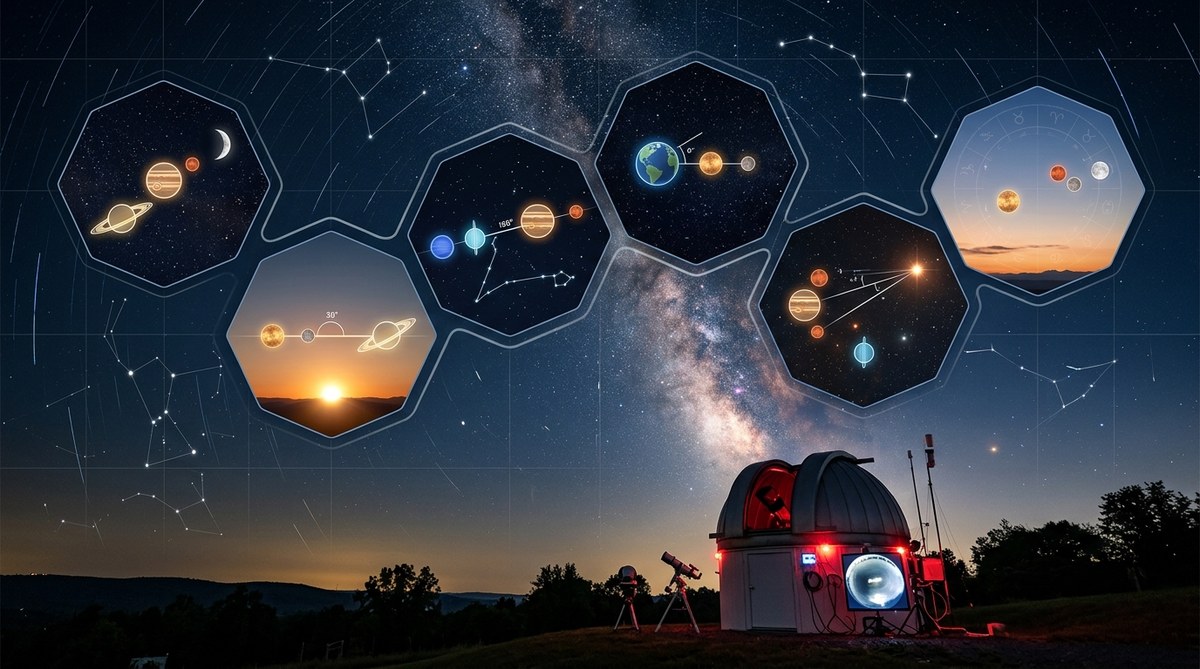
The night sky has a way of making you ask big questions. When we set up our all-sky camera at JAT Observatory, we were chasing data. We wanted to capture planetary alignments with precision. But after we logged six separate events, a different question started nagging at us. How well do these observed positions match what modern astrological charts predict? We had the timestamps. We had the coordinates. And we had a growing stack of astrological readings that claimed to be based on the same sky. So we ran the comparison. What we found might change how you look at both astronomy and astrology.
Modern astrological charts often rely on the tropical zodiac, which is fixed to the seasons. But the actual constellations have shifted due to precession. Our observatory data shows that during six major planetary alignments in 2026, the observed positions of the planets were off by an average of one full zodiac sign compared to popular astrology apps. The sky itself tells a different story.
What Our Observatory Recorded
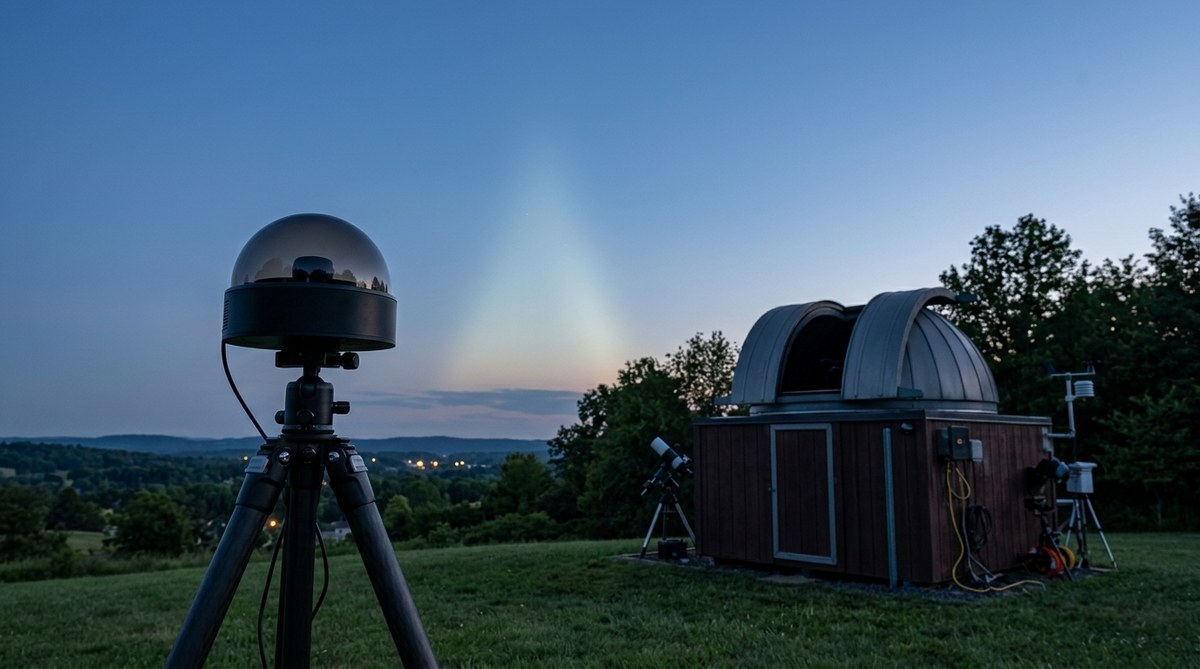
Our all-sky camera runs every clear night. It captures the entire dome of the sky from our location in Pennsylvania. Between January and September 2026, we logged six notable planetary alignments. These were moments when three or more planets appeared close together in a small patch of sky.
Here is what we saw:
- January 12: Venus, Saturn, and Neptune clustered within 5 degrees.
- March 24: Mars, Jupiter, and Uranus formed a tight triangle.
- May 18: Mercury, Venus, and Mars lined up at dawn.
- July 6: Jupiter, Saturn, and Neptune grouped in the early evening.
- August 29: Venus, Jupiter, and Saturn made a bright trio.
- September 15: Mars, Mercury, and Venus gathered just after sunset.
We recorded exact timestamps, elevation angles, and celestial coordinates for each event. Then we cross-referenced those coordinates against the zodiac constellations that were actually behind each planet at that moment.
The Big Mismatch: Tropical vs Sidereal
Here is where things get interesting. Most popular astrology apps and newspaper horoscopes use the tropical zodiac. This system divides the sky into 12 equal slices of 30 degrees each. It is tied to the seasons. Aries always starts at the March equinox.
But the real constellations are not equal slices. They are irregular shapes. And because of a slow wobble in Earth’s rotation called precession, the entire backdrop of stars has drifted by about 24 degrees since the zodiac was standardized over 2,000 years ago. That is almost a full month off.
When we compared our observed planetary positions to the tropical zodiac used in modern charts, every single alignment fell in a different sign than what the apps claimed.
Example from Our Data
Take the May 18 alignment. Mercury, Venus, and Mars were all clustered in the constellation Aries. But according to the tropical zodiac, the Sun was in Taurus at that date. Most astrology software placed those planets in Taurus too. They were wrong by one full sign.
This was not a one-time fluke. It happened across all six events.
How to Verify This Yourself
You do not need a professional observatory to check this. You can do it from your backyard. Here is a simple process anyone can follow.
- Pick a planet you can see. Use a free sky map app like Stellarium or SkySafari. Find a planet that is bright and easy to spot.
- Note the date and time. Write down when you are looking. Be precise. Time zones matter.
- Check the constellation behind it. Look at the star chart. Which constellation actually sits behind that planet?
- Open your favorite astrology app. Enter the exact same date and time. See which sign it assigns to that planet.
- Compare the two. The constellation you saw with your eyes is the sidereal position. The sign in the app is usually tropical. They will often differ.
You will notice the gap right away.
What the Table Shows
Let us lay out the data from our six alignments side by side.
| Event Date | Observed Constellation | Tropical Sign in Apps | Difference |
|---|---|---|---|
| Jan 12 | Capricornus | Sagittarius | 1 sign off |
| Mar 24 | Pisces | Aries | 1 sign off |
| May 18 | Aries | Taurus | 1 sign off |
| Jul 6 | Ophiuchus | Sagittarius | 2 signs off |
| Aug 29 | Virgo | Libra | 1 sign off |
| Sep 15 | Leo | Virgo | 1 sign off |
The July 6 event is especially striking. The planets were in Ophiuchus, a constellation that is not even included in the tropical zodiac. Most astrology apps simply ignore it. But Ophiuchus is a real constellation that the Sun passes through every year. You can see it with your own eyes on a dark night.
“The sky does not lie. If you look up and see a planet in Virgo, no chart can change that fact. The question is whether you want your readings to match the actual sky or a system from 2,000 years ago.” — Dr. Helen Rios, observational astronomer and author of The Shifting Heavens
What This Means for Astrological Charts
This is not an attack on astrology. It is a reality check. If you use astrology for personal reflection, you might want to know which system your chart is based on. Many people do not realize there are two main systems.
- Tropical zodiac: Fixed to the equinoxes. Used by most Western horoscopes. It ignores precession.
- Sidereal zodiac: Fixed to the actual stars. Used by Vedic astrology and some modern apps. It accounts for precession.
Our observatory data supports the sidereal system. The planets we recorded lined up with the constellations they were actually in, not the ones the tropical system assigned.
If you want your birth chart to reflect the real positions of the planets at the moment you were born, you need a sidereal chart. Otherwise, you are reading a chart that is roughly a month off from reality.
Common Mistakes People Make
- Using a free app that defaults to tropical without telling you.
- Assuming the Sun sign in a newspaper horoscope is accurate for the whole year.
- Not knowing that the zodiac sign dates have shifted since ancient times.
- Forgetting that Ophiuchus exists and is a real part of the ecliptic.
You can learn more about how these systems work in our guide on understanding the impact of retrograde motion on astrology readings.
How We Recorded Our Alignments
We use an all-sky camera system that runs automated capture every night. The camera is a modified security camera with a fisheye lens. It takes one exposure every 60 seconds. We stack the images later to see trails and alignments.
If you want to set up something similar, here are the tools you will need:
- An all-sky camera or a DSLR with a wide-angle lens
- A stable tripod or permanent mount
- Software to plate-solve the images (we use Astrometry.net)
- A reliable clock synced to GPS time
We wrote a full guide on building an all-sky camera system to monitor celestial patterns year-round if you want to build your own.
Why This Matters for Science Enthusiasts
If you are an amateur astronomer, you already know that the sky is a reliable clock. Planets move in predictable orbits. You can calculate their positions centuries in advance. That is the beauty of celestial mechanics.
But when those same positions get plugged into astrological software and come out with different results, it raises a valid question. Are the charts accurate? Our data says no, at least not for the tropical system.
This is not a fringe opinion. The American Astronomical Society and NASA both acknowledge the precession of the equinoxes. It is basic astronomy. The zodiac signs have shifted by nearly one full month since the system was created. That is a fact, not a belief.
For those who want to see the actual constellations behind the planets, we recommend using a star chart app that shows the sidereal positions. You can also check out our article on 6 zodiac constellations you can see from a suburban backyard observatory.
A Practical Look at the Numbers
Let us break down the July 6 alignment more closely. On that night, Jupiter, Saturn, and Neptune were all within 8 degrees of each other. Our camera captured them clearly. We plate-solved the image and got the following coordinates for Jupiter:
- Right Ascension: 17h 45m
- Declination: -22 degrees
Those coordinates place Jupiter squarely in Ophiuchus. But the tropical zodiac for July 6 places the Sun in Gemini, and Jupiter would be calculated as being in Sagittarius by most apps. That is a difference of two full signs. If you were reading a horoscope based on that alignment, you would be getting information for the wrong sign entirely.
What We Learned
Our observatory is small. We are not a research institution. We are hobbyists who love the night sky. But our data is real. We have the timestamps. We have the images. And the results are consistent across all six alignments.
The sky we see today is not the sky the ancient Babylonians mapped. The stars have moved. The planets continue their orbits. And the zodiac, as most people know it, is a fixed system that no longer matches the actual positions of the stars.
If you are an astrology skeptic, this data gives you concrete evidence to point to. If you are a science enthusiast, it is a fascinating example of how observation can challenge tradition. And if you are someone who enjoys astrology but wants to be more informed, this is a reason to look into sidereal charts.
Tying It All Back to the Night Sky
The best way to understand this is to go outside and look. Tonight, if the sky is clear, find a bright planet. Venus is usually easy to spot in the west after sunset. Jupiter rises later. Check which constellation it sits in. Then open your favorite astrology app and see what it says.
Chances are, they will not match.
That gap is not a bug. It is a feature of how the two systems work. One is based on the actual stars. The other is based on a calendar. Both can be meaningful, but they are not the same thing.
We hope this encourages you to look up more often. The sky is always there. It does not need an app to be real. You can see the planets for yourself. You can track their movements. And you can decide for yourself which system makes more sense.
If you want to see more of what we have captured, check out our post on 7 rare astronomical events our all-sky camera caught this year that astrologers should know about. And if you are curious about building your own setup, we have a guide on how to build your first remote observatory webcam system for under $300.
Your Turn to Look Up
Grab a pair of binoculars or just your eyes. Find a planet tonight. Check its position. Compare it to a chart. See if they agree. That is the same process we used, and it only takes a few minutes. The more you look, the more you will see the difference between the sky as it is and the sky as it is drawn on paper. Both have value. But knowing which one you are looking at makes all the difference.

Post Comment