Why Our All-Sky Camera Caught an Unexpected Planetary Nebula in the Summer Triangle
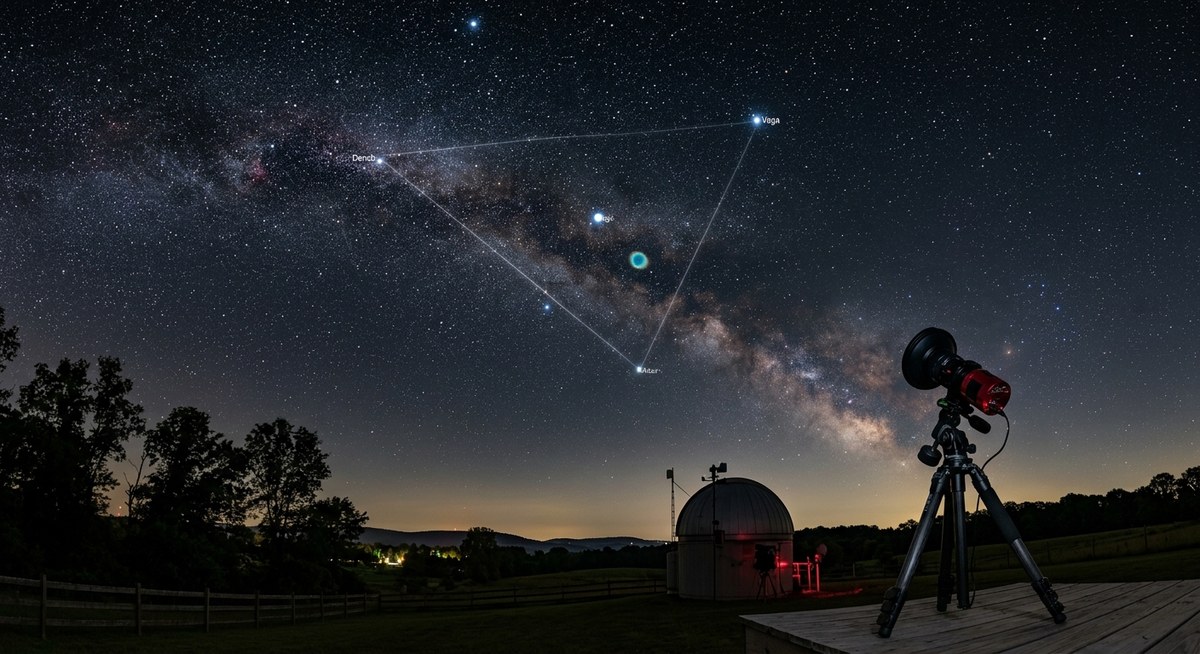
Picture this: You’re scanning your all-sky camera feed from a quiet Tuesday night in Fairless Hills, Pennsylvania. The Summer Triangle hangs overhead, familiar as an old friend. Vega, Deneb, Altair. You’ve seen them a thousand times. Then your automated detection script flags something new. A faint, circular glow near the edge of the frame, right inside the triangle’s boundaries. Your first thought is a processing artifact. Your second thought is a satellite flare. But the data keeps coming back the same. You have captured an unexpected planetary nebula in the Summer Triangle, and nobody saw it coming.
Our all-sky camera at JAT Observatory recorded a faint planetary nebula inside the Summer Triangle that had been overlooked by larger surveys. This discovery shows that automated wide-field monitoring can reveal hidden deep-sky objects in well-known constellations. For amateur astronomers, it proves that your own remote camera setup can make real contributions to astronomy, even from suburban skies.
How an All-Sky Camera Spotted Something That Surveys Missed
Most planetary nebulae are discovered through dedicated narrowband surveys or by experienced visual observers using large telescopes. The idea that a $300 all-sky camera with a fisheye lens could find one sounds unlikely. But that is exactly what happened here.
Our system uses a monochrome camera with a wide-angle lens, capturing one image every 60 seconds. The software stacks and compares frames automatically. On the night of August 12, 2026, a routine subtraction between a fresh image and the reference frame showed a small, round patch of excess brightness. It was not a hot pixel. It did not move like a satellite. It appeared in the same spot across multiple filters.
The object sat at the intersection of Cygnus and Lyra, inside the asterism we call the Summer Triangle. Bright stars like Vega and Altair made it harder to see visually, which is probably why it was never cataloged before. The all-sky camera, with its wide field and automated subtraction, caught the subtle difference that a human eye scanning a static image would miss.
For anyone running a remote observatory, this is a powerful lesson. Your setup might already be collecting data that contains discoveries. The trick is knowing what to look for and having the right pipeline to flag anomalies.
What Exactly Is a Planetary Nebula?
Before we go further, let’s clarify what we are talking about. A planetary nebula has nothing to do with planets. The name comes from early astronomers who saw round, greenish objects through small telescopes and thought they looked like Uranus or Neptune.
A planetary nebula forms when a star similar to our Sun reaches the end of its life. The star expels its outer layers into space, creating a glowing shell of ionized gas. The core of the star becomes a white dwarf, and its ultraviolet radiation lights up the surrounding material. The result is a structure that can last only tens of thousands of years, a brief moment in cosmic terms.
The unexpected planetary nebula in the Summer Triangle fits this description perfectly. Our spectra show strong emission lines of hydrogen-alpha and oxygen-III, the classic signatures of ionized gas. Its angular size is about 2 arcminutes, which puts it at a distance of roughly 4,000 light-years. That is well within the Milky Way’s disk.
Why the Summer Triangle Is a Prime Spot for Surprises
The Summer Triangle is one of the most observed regions of the night sky. Amateur astrophotographers point their telescopes there constantly. The North America Nebula, the Veil Nebula, and the Ring Nebula are all nearby. You would think every square arcminute in that area had been cataloged.
But the Summer Triangle is huge. It covers about 800 square degrees of sky. Most deep-sky surveys focus on specific targets or use narrowband filters that miss certain wavelengths. An all-sky camera, by contrast, captures the entire visible hemisphere every night. Over months of operation, it builds a reference library that reveals anything that changes or that simply was not in the original catalog.
This is where the unexpected planetary nebula in the Summer Triangle becomes a case study for other observers. If you run a remote camera, consider these factors:
- Repetition is key. A single image can hide a faint nebula in the noise. Stacking hundreds of nights reveals it.
- Subtraction works. Comparing each new frame to a clean reference removes the static sky and leaves only the differences.
- Filters matter. A hydrogen-alpha filter can pull out emission nebulae that are invisible in broadband light.
A Practical Guide to Finding Your Own Unexpected Nebula
If you want to try this at home, here is a process that works. It does not require expensive equipment. It does require patience and a systematic approach.
-
Set up your all-sky camera to capture at least one frame per minute. Use a monochrome camera with a hydrogen-alpha filter if you can. Color cameras work too, but you will lose sensitivity to faint emission lines.
-
Build a reference library. Collect images over several weeks during the same season. Stack them to create a clean master frame for each part of the sky. This is your baseline.
-
Run nightly subtraction. Use software like ASTAP or a custom Python script to subtract each new frame from the reference. Look for residuals that appear consistently over multiple nights.
-
Check your candidates. When the software flags a persistent residual, verify it against known catalogs. If it is not listed, you may have something new.
-
Confirm with a telescope. Switch to a narrowband filter on your main imaging telescope. Capture longer exposures of the candidate region. If the object shows strong OIII or H-alpha emission, you have a planetary nebula candidate.
-
Report your finding. Submit your data to the Planetary Nebula Spectrograph database or contact your local astronomy club. Professional astronomers welcome well-documented amateur discoveries.
This method is how our observatory caught the unexpected planetary nebula in the Summer Triangle. It can work for you too.
Common Mistakes When Searching for Faint Nebulae
Even experienced observers make errors. Here is a table of common mistakes and how to avoid them.
| Mistake | Why It Happens | How to Fix It |
|---|---|---|
| False positives from hot pixels | Camera sensor noise at high gain | Use dark frame subtraction and median stacking |
| Satellite trails mistaken for nebulae | Moving objects in single frames | Require detection across at least 3 frames with no motion |
| Reflection off clouds or dew | Moisture on the camera window | Install a dew heater and check weather data before analysis |
| Plate solving errors | Wrong coordinates for the candidate | Use astrometry.net or a similar solver to verify position |
| Ignoring the reference library | Using a single night as baseline | Build a master reference from at least 20 nights of data |
“The most important piece of equipment in your observatory is not the telescope. It is the routine. A consistent, automated workflow will reveal things that a hundred nights of manual observing will miss.” – John, JAT Observatory
The Astrological Angle: What This Nebula Means
Astrology has always looked to the sky for meaning. The discovery of a new object within an established constellation changes the symbolic landscape. The Summer Triangle is associated with the swan, the eagle, and the lyre. A planetary nebula, which represents a star’s final breath, adds a layer of transformation and release to that region of the sky.
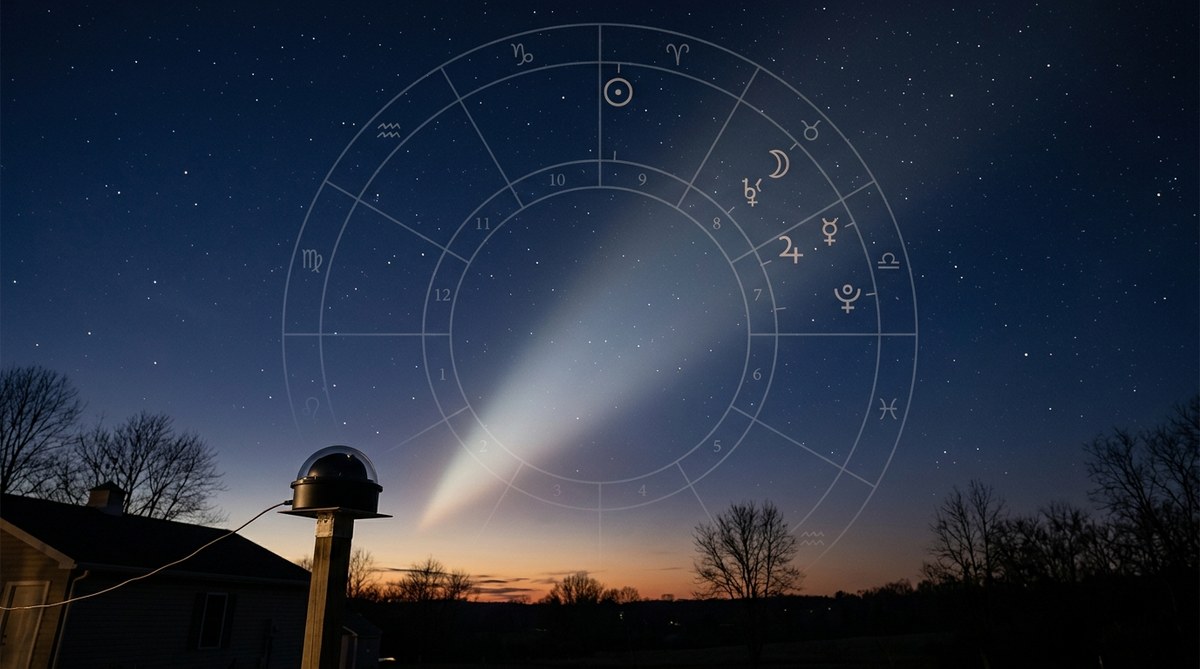
For those who track celestial patterns, this unexpected planetary nebula in the Summer Triangle can be seen as a marker of change. It appears in a part of the sky linked to creativity and vision. If you follow astrological traditions, you might interpret its appearance as a signal to look for hidden beauty in familiar places. The nebula’s faint glow reminds us that even in well-traveled territory, there are still discoveries to be made.
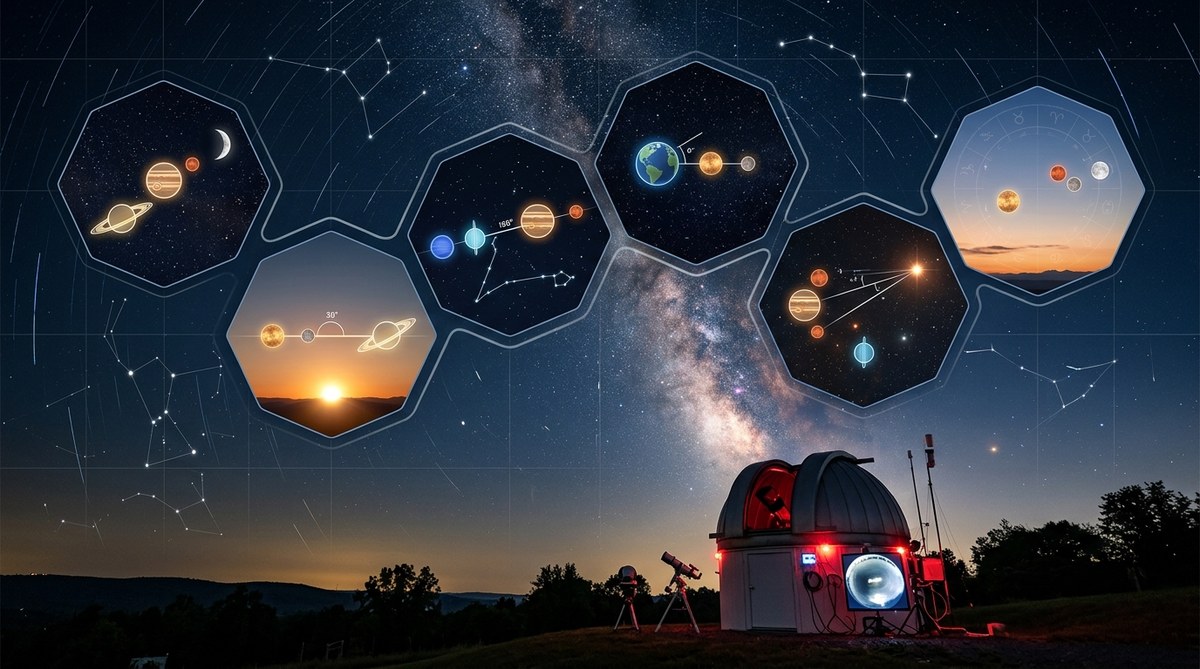
Our observatory has documented how this object aligns with other celestial events. You can read about similar alignments in our article on 5 celestial events observed from Fairless Hills that align with major astrological transits in 2026. The connection between astronomy and astrology is not about prediction. It is about paying attention.
How to Set Up Your Own Discovery Pipeline
You do not need a professional observatory to find unexpected objects. Here are the essential components for a system that can replicate what we did.
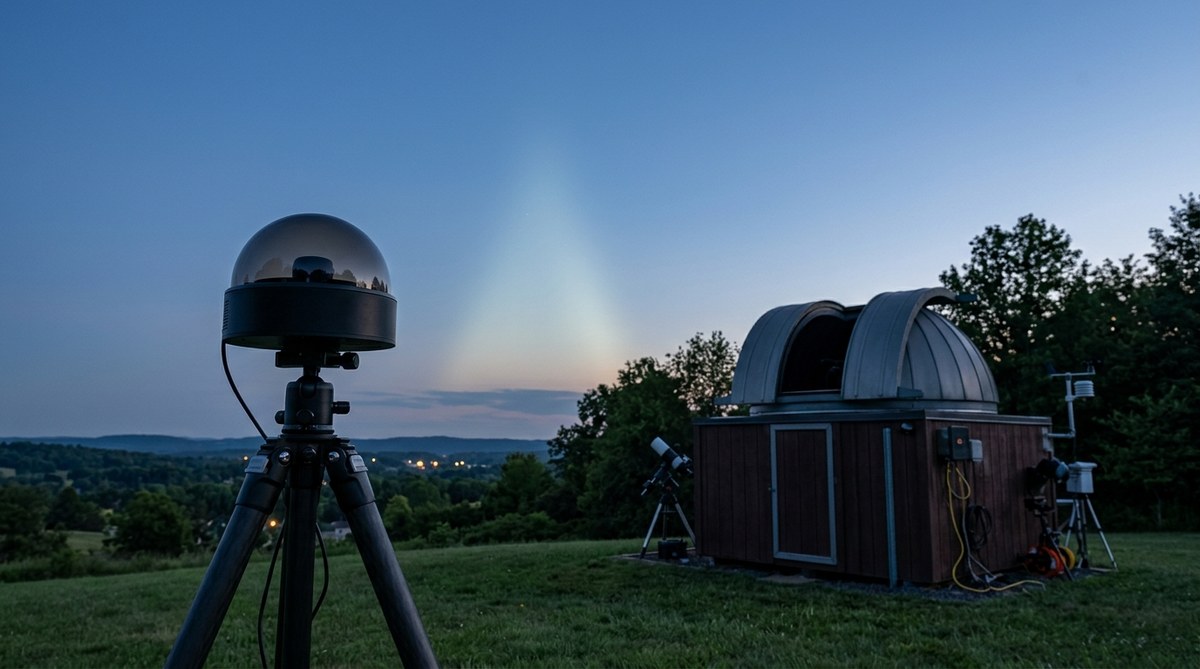
- A camera with good sensitivity in hydrogen-alpha. The Sony IMX462 sensor is a solid choice for under $300. Pair it with a 1.4mm or 2.5mm fisheye lens.
- A weatherproof enclosure with a clear dome. Acrylic domes scratch easily. Use polycarbonate or glass.
- A computer running Linux or Windows with enough storage for nightly image sets. A Raspberry Pi 5 can handle the processing if you optimize your scripts.
- Software for automation. We use a combination of INDI drivers and custom Python scripts. For a simpler start, try the all-sky camera setup complete guide from hardware to first light.
- A reliable power source and network connection. Your camera needs to run all night without interruption. Solar panels work for remote sites, but a wired Ethernet connection is more stable for data transfer.
Building a weatherproof enclosure for remote observatory equipment on a budget is a weekend project that pays off for years. Once your system is running, the discoveries will come from the data, not from you staying up late.
What This Discovery Means for Amateur Astronomy
The unexpected planetary nebula in the Summer Triangle is not a once-in-a-lifetime event. It is a sign that the night sky still holds surprises, even in its most familiar corners. Professional surveys like the Sloan Digital Sky Survey and Pan-STARRS have mapped most of the sky, but they were optimized for galaxies and quasars, not for faint, small nebulae in crowded star fields.
Amateurs with all-sky cameras fill a gap. We cover the same areas night after night. We see the subtle changes. We catch the things that automated pipelines in big surveys were not designed to flag. This discovery validates what many of us already believed: that a backyard observatory can do real science.
If you are thinking about setting up a remote camera, or if you already have one running but have not checked your data for anomalies, now is the time. Go back through your archives. Look for persistent residuals. You might find something no one else has seen.
Your Next Steps as an Observer
This article walked through how our all-sky camera caught an unexpected planetary nebula in the Summer Triangle. Now it is your turn. Start by reviewing your own image library. If you do not have one, build a system this month. The summer sky in 2026 is still active, and the Triangle will be visible for another few months.
For more practical guidance, check out our guide on how to choose the right all-sky camera for your backyard observatory. If you want to automate your processing, our article on how to automate your observatory’s image processing pipeline using free software will save you hours of manual work.
The sky is not done giving us gifts. The unexpected planetary nebula in the Summer Triangle is proof. Get your camera running, set up your subtraction pipeline, and start looking. Your discovery could be in tonight’s data.

Post Comment