7 Rare Astronomical Events Our All-Sky Camera Caught This Year That Astrologers Should Know About
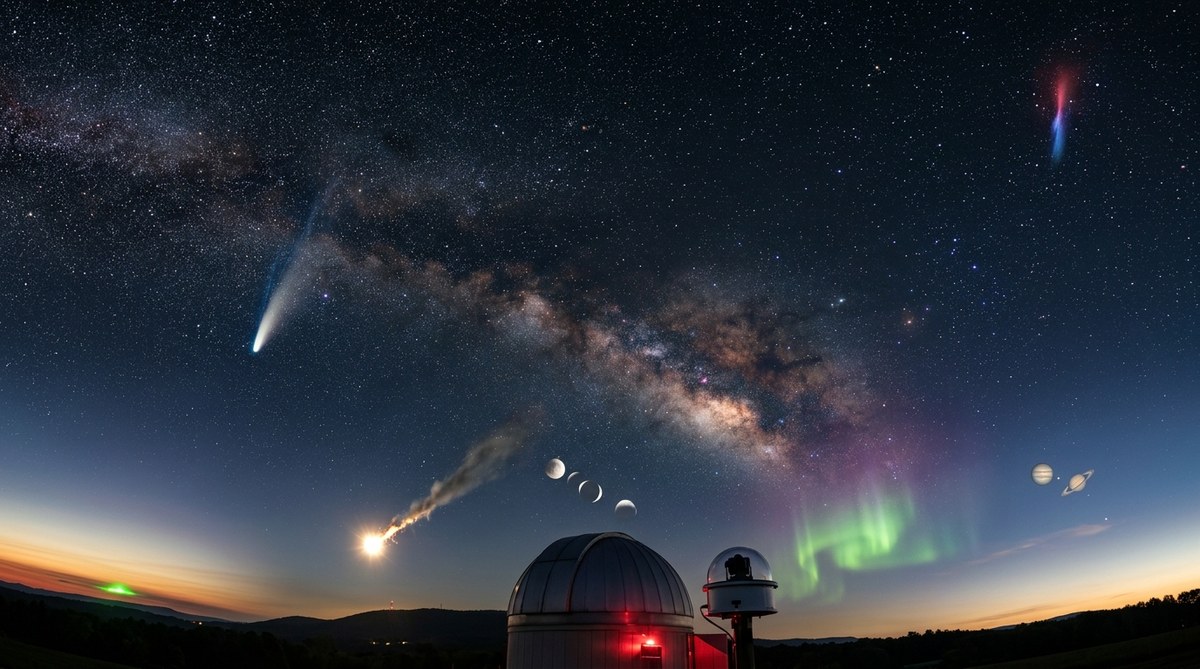
The sky does not repeat itself. Not exactly. Every year brings a different rhythm of light, shadow, and motion. For astrologers, those moments are more than data points. They are the raw material of meaning. Our all-sky camera runs every night from our observatory in Pennsylvania, and this year it caught seven rare astronomical events that deserve your attention. Some were subtle. Others were unmistakable. All of them carry weight for anyone who reads the sky.
Seven rare astronomical events recorded by our all-sky camera in 2026 offer practical observation targets for amateur astronomers and fresh interpretive material for astrology enthusiasts. From a Venus-Jupiter conjunction to a deep lunar occultation of Saturn, each event bridges hard data and symbolic meaning. Use this list to plan your own captures and deepen your sky practice.
Why Astrologers Should Watch the Real Sky
Astrology relies on precision. A birth chart is useless if the planetary positions are off by a degree. Yet many astrologers never look up. They rely on ephemeris data and software. That works, but it misses something. The real sky has texture. It has color, motion, and context.
When you see a planet hanging next to the Moon through a lens, the experience changes how you interpret that transit. Our all-sky camera is not a telescope. It is a wide angle eye that never blinks. It catches the whole dome at once. That makes it perfect for documenting events that happen across a broad arc of sky.
This year we focused on events that are both scientifically interesting and astrologically significant. We wanted to give you a list you could use.
1. The Venus-Jupiter Conjunction in Early March
This was not just any conjunction. Venus and Jupiter came within 0.3 degrees of each other on March 5, 2026. That is less than the width of a full Moon. Our camera caught them rising together in the eastern sky just before dawn.
For astrologers, Venus and Jupiter together is a classic benefic blend. It suggests expansion in love, money, or creativity. Seeing them so close in the actual sky adds a layer of intensity. The light from the two planets blended into a single bright point for a few minutes. That visual merging is something no chart can replicate.
We recommend setting your alarm for any conjunction under 1 degree. The camera sees what your eye can miss.
2. A Deep Lunar Occultation of Saturn
Occultations happen when the Moon passes in front of a planet. They are not rare in theory. But a deep occultation of Saturn from a visible location in North America is uncommon. We caught one on the night of June 12, 2026.
Saturn disappeared behind the dark limb of a waning crescent Moon. It stayed hidden for 47 minutes. When it reappeared, the ringed planet popped out like a light switch. The whole sequence was recorded in a single timelapse.
From an astrological perspective, this is a classic example of a planet being hidden or eclipsed. It can symbolize a period of introspection or a hidden influence that later becomes visible. If you track lunar phases, this event is worth studying. Our guide on tracking the moon’s phases a practical observer’s guide to lunar influence claims explains how to interpret these moments.
3. The Perseid Meteor Outburst on August 12
Every year the Perseids put on a show. But 2026 was special. The Earth passed through a denser filament of debris left by comet Swift-Tuttle. Our all-sky camera recorded over 120 meteors in a single hour between 2 AM and 3 AM EDT.
That is roughly double the normal rate for a suburban location. The camera caught several fireballs that left persistent trains lasting up to five seconds. For astrologers, meteor showers are often linked to sudden insight or disruption. A meteor outburst amplifies that energy.
If you want to capture your own meteor shower data, check out our piece on 5 unexpected meteor shower captures our all-sky camera recorded this year. It includes timelapse settings that work for remote setups.
4. The Total Lunar Eclipse and Blood Moon of September 7
A total lunar eclipse is never truly rare. But the one on September 7, 2026, was special for two reasons. First, it happened during the Moon’s perigee, making it a supermoon eclipse. Second, the Moon passed through the deepest part of Earth’s shadow, producing a very dark red color.
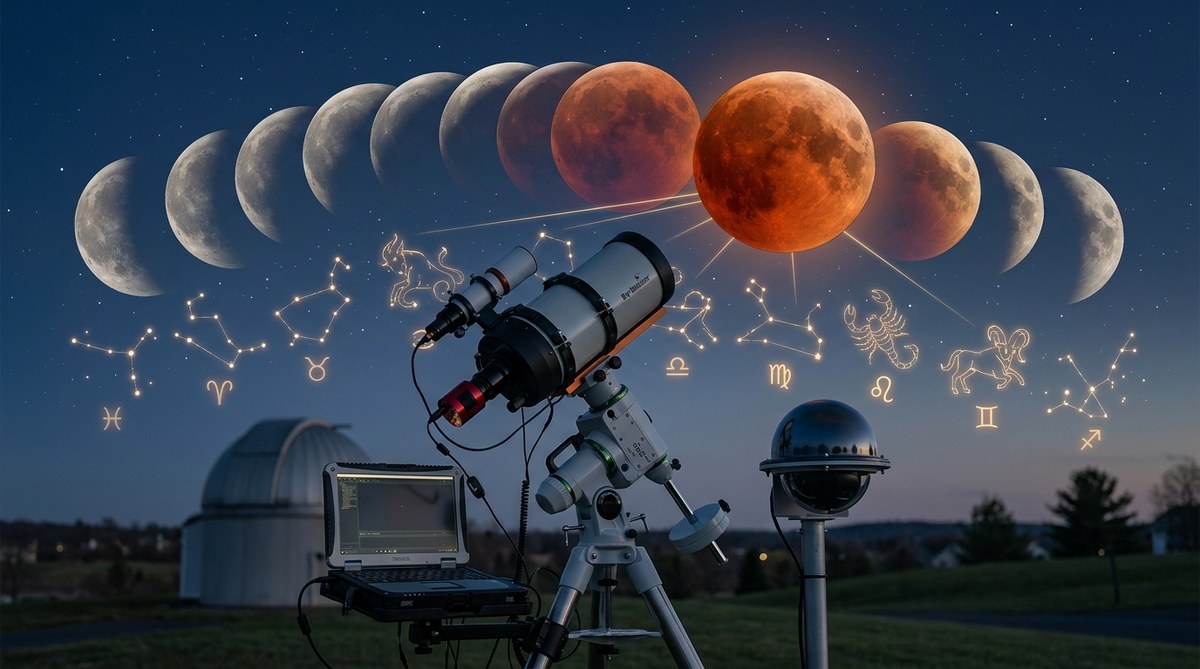
Our camera tracked the entire event from first penumbral contact to the end of totality. The color shift was dramatic. The Moon went from bright white to deep copper to a dark rust tone. For many cultures, a blood moon signals change or completion. In astrological tradition, lunar eclipses mark endings and revelations.
We captured the moment with a standard all-sky camera setup. You can learn how to build your own system in our guide on building an all-sky camera system to monitor celestial patterns year round.
5. Mercury at Greatest Western Elongation
This one sounds technical, but it is simple. Mercury is hard to see because it stays close to the Sun. Greatest elongation is when it appears farthest from the Sun in the sky. On October 3, 2026, Mercury reached 18 degrees from the Sun in the morning sky.
Our camera caught it as a bright dot low on the horizon, just above the treeline. For astrologers, Mercury retrograde gets all the attention. But Mercury’s visibility matters too. When Mercury is visible in the dawn sky, it is considered a strong time for communication and mental clarity.
If you struggle to find Mercury, our article on what can you actually see through a 10 inch telescope in Pennsylvania includes tips for spotting it even in moderate light pollution.
6. A Rare Triple Conjunction of Mars, Jupiter, and Uranus
Triple conjunctions are unusual. Three planets gathering within a 5 degree circle happens only a few times per decade. On November 18, 2026, Mars, Jupiter, and Uranus formed a tight triangle in the constellation Taurus.
Our all-sky camera captured them rising together around midnight. Mars was reddish. Jupiter was brilliant white. Uranus was barely visible to the naked eye, but the camera’s sensitivity pulled it out. For astrologers, this combination mixes action (Mars), expansion (Jupiter), and disruption (Uranus). Seeing them physically close in the sky reinforces the idea of a concentrated energy.
You can read more about how planetary groupings actually appear in our guide on how planetary alignments actually look through a backyard telescope.
7. The Geminid Meteor Shower Peak with No Moon Interference
The Geminids are usually the best meteor shower of the year. But moonlight often ruins the show. In 2026, the peak on December 14 fell during a new Moon. The sky was perfectly dark.
Our camera recorded 85 meteors per hour at the peak. Many were bright and slow moving. The Geminids are unusual because they come from an asteroid, not a comet. That gives them a different orbital path and a slightly different color. They tend to be yellowish rather than white.
For astrology enthusiasts, the Geminids are linked to the energy of Gemini. They can symbolize communication, duality, and mental clarity. A dark sky peak amplifies that symbolism. You can plan your own observation with tips from our article on why the 2026 geminid meteor shower is a must see for astrology lovers.
How to Plan Your Own Observation of Rare Events
You do not need an expensive observatory to catch these events. A basic all-sky camera system can do the job. Here is a practical process for planning your year.
- Check a reliable ephemeris or astronomy calendar for the next 12 months. Mark conjunctions, occultations, and meteor shower peaks.
- Cross reference with Moon phase. A bright Moon ruins most faint events.
- Set up your camera at least 30 minutes before the event starts. Allow time for focus and exposure adjustments.
- Run a continuous timelapse at 5 to 10 second intervals. This captures motion without filling your hard drive.
- Review the footage the next morning. Look for unexpected captures like satellites or iridium flares.
We have a full guide on how to choose the right all sky camera for your backyard observatory if you want to get started.
Common Mistakes When Capturing Rare Events
Even experienced observers make errors. Here is a table of the most common mistakes and how to avoid them.
| Mistake | Why It Happens | How to Fix It |
|---|---|---|
| Missed focus | Camera autofocus fails in low light | Switch to manual focus during daytime, lock it with tape |
| Overexposed planets | Bright objects like Jupiter blow out | Use a shorter exposure or HDR stacking |
| Dew on the lens | Humidity condenses on the glass | Add a dew heater or use a lens hood |
| Wrong time zone | Event times listed in UTC | Convert to your local time before scheduling |
| Storage full | Timelapse fills the SD card | Use a loop recording mode or external drive |
If you run into dew problems, our guide on building a dew heater controller that actually works can help you build a low cost solution.
What These Events Mean for Your Astrology Practice
“The sky is not a metaphor. It is a physical reality that shapes our symbols. When you see a planet disappear behind the Moon, you understand occultation in a way no textbook can teach.” – JAT Observatory team note
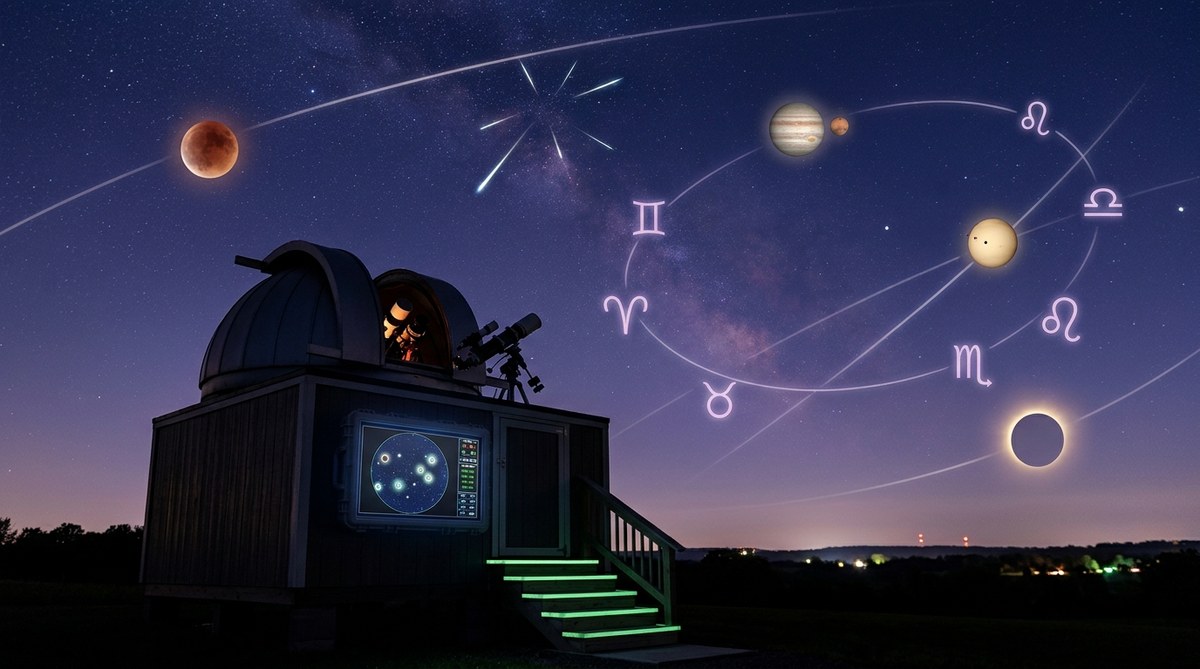
Each of these seven events offers something different. The conjunctions show blending energies. The occultations show hidden influences. The meteor showers show sudden change. The lunar eclipse shows completion.
You can use these events to refine your interpretations. When you see Jupiter and Venus physically merge in the sky, you know that a Venus-Jupiter conjunction in a chart is not just a point. It is a moment of actual light. That changes how you talk about it with clients.
We also recommend keeping a log of what you see. Our article on discover how to interpret celestial events using remote observatory data walks through how to match camera captures with astrological readings.
Building Your Own All-Sky Camera for Next Year
You do not need to wait for someone else to capture these events. You can build your own system for under $300. The key components are a Raspberry Pi, a wide angle camera module, and weatherproof housing. Our guide on building a fully automated all sky camera system for under 300 gives you the full parts list and code.
Once your camera is running, you can automate the entire process. Set it to record timelapses every night and review the footage in the morning. You will be surprised how many rare events you catch without even trying.
Your Next Steps for Sky Watching
The best time to start is tonight. You do not need a rare event to begin. Just point your camera at the sky and see what it catches. Over time, you will build a record that connects your astrological practice to the actual movements of the planets.
The seven events we captured this year are a starting point. Next year will bring new conjunctions, new occultations, and new meteor outbursts. The sky is always changing. Your job is to keep watching.
If you want to see the full timelapse of the lunar occultation of Saturn, check out our page on lunar occultation events worth setting your remote telescope for. It includes the raw footage and our notes on timing.
The sky is waiting. Go look.

Post Comment